
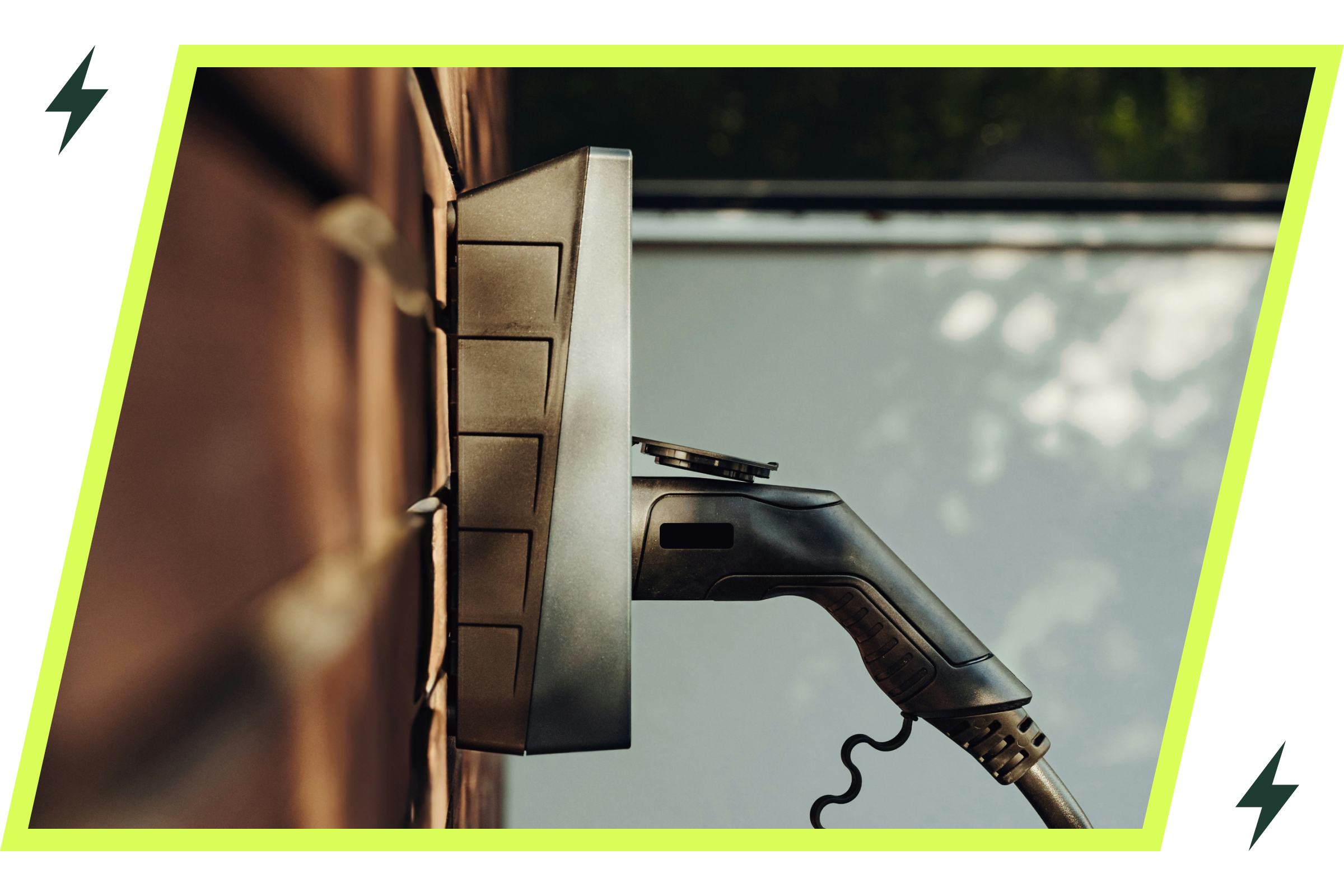
Popular chargers to have installed
Live prices from our store. Every charger here is 7kW, smart and OZEV-approved.
Ohme Home Pro
Native Octopus Intelligent Go integration and built-in PEN fault detection. Our best-selling charger.
VCHRGD Seven Pro (untethered)
Intelligent Octopus Go compatible, with PEN fault protection and a CT clamp in the box, which can keep installation costs down.
Pod Point Solo 3S (tethered)
One of the UK's best-known charging brands, tethered with a 6.5m cable.
Free UK delivery · full manufacturer warranty · advice on 0330 043 8012
Installing a home EV charger is one of the best investments you can make as an electric car owner. Charging at home is cheaper, more convenient, and faster than relying on a three-pin plug. But how does the installation process actually work, what does it cost, and what regulations do you need to be aware of?
This guide covers everything you need to know about EV charger installation in the UK — from choosing the right charger to finding a qualified installer and checking whether you qualify for a grant.
How much does EV charger installation cost?
The total cost of a home EV charger installation in the UK typically falls between £800 and £1,500. This includes both the charger unit itself and the installation labour. Here is a rough breakdown of what to expect:
| Cost element | Typical range | Notes |
|---|---|---|
| EV charger unit | £300 – £800 | Depends on brand and features |
| Standard installation | £300 – £500 | Within 10m of consumer unit |
| Extended cable run (10m+) | £100 – £300 extra | Longer distance to fuse board |
| Consumer unit upgrade | £150 – £300 | If your fuse board needs replacing |
| DNO application (if needed) | £0 – £100 | Required for some properties |
| EV Chargepoint Grant | Up to –£500 | Renters, flat owners, landlords and cross-pavement only |
What happens during installation?
A typical home EV charger installation takes between two and four hours. Here is what the process looks like from start to finish:
1. Site survey
Your installer will either visit your property or carry out a remote survey using photos. They will assess the distance from your fuse board to where you want the charger mounted, check your electrical supply, and confirm whether your consumer unit needs upgrading. Some installers include this in the installation cost, while others charge a separate survey fee.
2. DNO notification
Under current regulations, your installer must notify your local Distribution Network Operator (DNO) before installing an EV charger. This is because the charger draws significant power and the DNO needs to know about it for grid planning purposes. In most cases this is a simple notification that does not delay the installation. In some cases — particularly on older electrical supplies or in rural areas — the DNO may need to upgrade your supply, which can add a few weeks to the timeline.
The exception is a second chargepoint. Because the notify-afterwards route is only permitted where total property demand stays under 60A, adding a second charger usually requires an application to the DNO in advance, and a wait for their assessment. If you have two EVs, read our guide to charging two electric cars at home before booking — it covers load balancing, which can often keep you inside the simpler notification route.
3. Installation day
On the day of installation, the electrician will run a dedicated circuit from your consumer unit to the charger location. This involves fitting a new MCB (miniature circuit breaker) in your fuse board, running armoured or twin-and-earth cable to the mounting point, and physically mounting the charger on your wall. If your consumer unit does not have a spare way, or is an older model without RCD protection, it may need to be upgraded or replaced. A separate EV consumer unit is a common way to add a dedicated, protected circuit.
4. Testing and commissioning
Once installed, the electrician will carry out a full electrical test to make sure everything is safe and compliant. They will configure the charger, connect it to your WiFi if applicable, and walk you through how to use the app. You should receive an electrical installation certificate, which you will need if you are claiming the grant.
5. Registration
If your charger is OZEV approved and you are claiming the grant, your installer will handle the grant application on your behalf. They will also register the installation with your local building control body, as required under Part P of the building regulations.
Do I need planning permission?
In the vast majority of cases, no. Installing an EV charger at your home is considered permitted development, meaning you do not need planning permission. However, there are some exceptions:
Listed buildings: If your property is a listed building, you will need listed building consent before installing a charger.
Conservation areas: If the charger will be visible from the road in a conservation area, you may need to check with your local planning authority.
Flats and apartments: If you live in a flat, you will need permission from your landlord or management company. The installation may also need to comply with the building's fire regulations.
For a standard detached, semi-detached, or terraced house, you can go ahead without any planning applications.
Who can install an EV charger?
EV charger installation is not a DIY job. Under Part P of the building regulations in England and Wales, any new electrical circuit in a domestic property must be installed by a qualified electrician who is registered with a competent person scheme such as NICEIC, NAPIT, or ELECSA. This ensures the work meets BS 7671 (the IET Wiring Regulations) and is safe.
If you are claiming the EV Chargepoint Grant, your installer must also be an OZEV-approved installer. This means they have been authorised by the Office for Zero Emission Vehicles to carry out grant-eligible installations.
Having your own electrician fit it? Order the charger and installation materials together
Each bundle pairs the charger with a consumer unit, cable and fixings, so your electrician has the main materials on the day. Choose the supply cable length that matches your run from the consumer unit.
Ohme Home Pro + installation kit
Ohme Home Pro tethered charger with consumer unit, cable and fixings.
VCHRGD Seven Pro + installation kit
VCHRGD Seven Pro untethered charger with consumer unit, cable and fixings.
Pod Point Solo 3S + installation kit
Pod Point Solo 3S tethered charger with consumer unit, cable and fixings.
Evec VEC01 + installation kit
Evec VEC01 untethered charger with consumer unit, cable and fixings.
Browse every bundle in our EV installation kits collection.
Choosing the right charger for your home
Before your installer arrives, you will need to decide which charger to go for. Here are the key decisions:
Tethered vs untethered
A tethered charger has the cable permanently attached, so you simply grab the connector and plug into your car. An untethered charger has a Type 2 socket, and you use your own charging cable. Tethered is more convenient for daily use; untethered gives a cleaner look and is better if you have multiple EVs with different connectors.
Smart vs non-smart
Since July 2023, all home EV chargers installed in the UK must be smart chargers. This means they must be capable of connecting to the internet, scheduling charging sessions, and responding to energy demand signals. In practice, every charger we sell at eChargers UK meets this requirement.
Power output
Most home chargers are 7kW, which is the maximum you can get on a single-phase electricity supply (the standard in UK homes). This will add around 30 miles of range per hour of charging, fully charging most EVs overnight. If your property has a three-phase supply, you could opt for a 22kW charger for faster charging.
One charger or two?
If there are two electric cars on the driveway — or one on order — decide before installation day, not after. Retrofitting a second chargepoint means a second cable run, a second DNO conversation and often a consumer unit with no spare capacity left. A dual-socket unit or a load-balanced pair is far cheaper to specify upfront. See our guide to charging two electric cars at home.
Smart tariff compatibility
If you are on an EV-specific energy tariff like Octopus Intelligent Go or OVO Charge Anytime, check that your charger is compatible. Chargers from Ohme, Indra, VCHRGD and Cord integrate with these tariffs to automatically charge your car when electricity is cheapest. Easee, Pod Point and Rolec chargers are not currently on the Intelligent Octopus Go list, so check before you buy if the tariff matters to you.
You can also browse our collections of chargers compatible with Octopus Intelligent Go and compatible with OVO Charge Anytime.
EV Chargepoint Grant: rates and who qualifies
Since 1 April 2026, every strand of the EV Chargepoint Grant pays 75% of the combined cost of hardware and installation, up to £500 per socket — raised from £350. The rates are confirmed until 31 March 2027.
| Scheme | Rate since 1 April 2026 | Who it covers |
|---|---|---|
| Renters and flat owners | 75%, up to £500 per socket | Renters in any residential property, and flat owner-occupiers. Requires private off-street parking and landlord or freeholder permission. One grant per household. |
| Residential landlords | 75%, up to £500 per socket | Up to 200 sockets per year across one or several properties. Groups under common control share the 200 limit. |
| On-street / cross-pavement | 75%, up to £500 per socket | Households without off-street parking, fitting a permanent cable channel. Cable mats and covers do not qualify. |
| Workplace Charging Scheme | £500 per socket, max £20,000 | Businesses, charities and public sector. Up to 40 sockets per applicant across all sites. |
| Owner-occupiers of houses | Not eligible | No domestic grant has been available to this group since March 2022. |
To claim, you need an OZEV-approved installer and an OZEV-approved charger. Your installer handles the paperwork and deducts the grant from your invoice. Full detail in our guide to all EV charger grants available in 2026, or check the official guidance on GOV.UK.
How long does installation take?
A straightforward installation where the charger is mounted within a few metres of your fuse board typically takes two to three hours. If the cable run is longer, or if your consumer unit needs upgrading, it can take up to half a day.
The overall timeline from ordering to having a working charger is usually one to two weeks, depending on installer availability and whether a DNO application is needed. Allow longer if you are having a second chargepoint fitted.
Common EV charger installation questions
Am I eligible for the grant if I own my house?
No. The domestic grant is restricted to renters, flat owner-occupiers, residential landlords, and households fitting a cross-pavement solution. Owner-occupiers of single-dwelling houses have not had access to a home charger grant since the EVHS closed in March 2022.
Can I install a charger if I park on the street?
Yes. Since 1 April 2026 the cross-pavement strand of the grant pays 75% up to £500 per socket towards a chargepoint installed alongside a permanent cable channel cut into the pavement. Temporary solutions such as cable mats and covers do not qualify, and you will normally need your council's permission for the channel.
Will installing a charger increase my electricity bill?
Yes, but it is still significantly cheaper than petrol. Charging at home on a standard tariff costs roughly 7–12p per mile, compared to 16–20p per mile for a petrol car. On a cheap overnight tariff, home charging can cost as little as 2–4p per mile.
Can I move my charger if I move house?
Technically yes, but most people leave the charger in place as it adds value to the property. EV chargers are increasingly seen as a selling point, similar to a new boiler or solar panels.
What if my fuse board is old?
If your consumer unit is an older model without RCD protection, your installer will likely recommend upgrading it. This adds £150–£300 to the cost but is necessary for safety and compliance.
Can I have two chargers installed at once?
Yes, and doing both at the same time is considerably cheaper than adding the second later. The constraint is electrical rather than regulatory — two 7kW units draw 64A between them, so most properties need a load balancing device. See our guide to charging two electric cars at home.
What is the difference between tethered and untethered?
A tethered charger has a built-in cable — just grab it and plug in. An untethered charger has a socket, and you use your own Type 2 cable. Tethered is more convenient; untethered is tidier and more flexible.
Do I need a dedicated parking space?
For the main grant strands you need private off-street parking — driveways, garages, car ports and private parking areas all count. You do not need a garage; wall-mounted chargers are weatherproof and designed for outdoor use. If you have no off-street parking at all, the cross-pavement strand is the route to look at.
Ready to get started?
Browse our full range of home EV chargers, choose the right model for your needs, and find a trusted installer near you. If you already have an electrician, our installation kits put the charger and materials in one order. With free UK delivery and OZEV-approved options, getting a home charger has never been easier.
If you need help choosing, call us on 0330 043 8012 or email sales@echargersuk.co.uk.