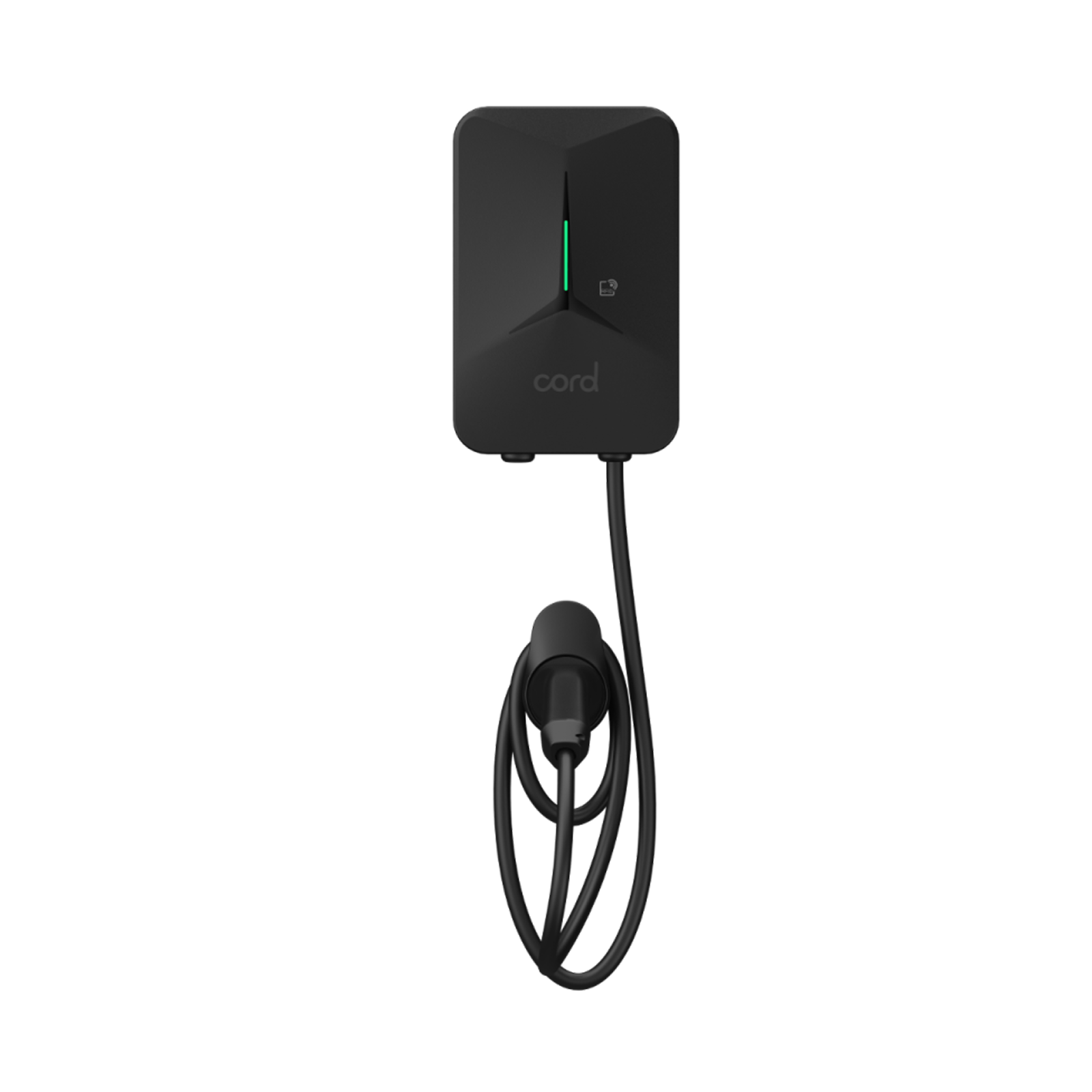
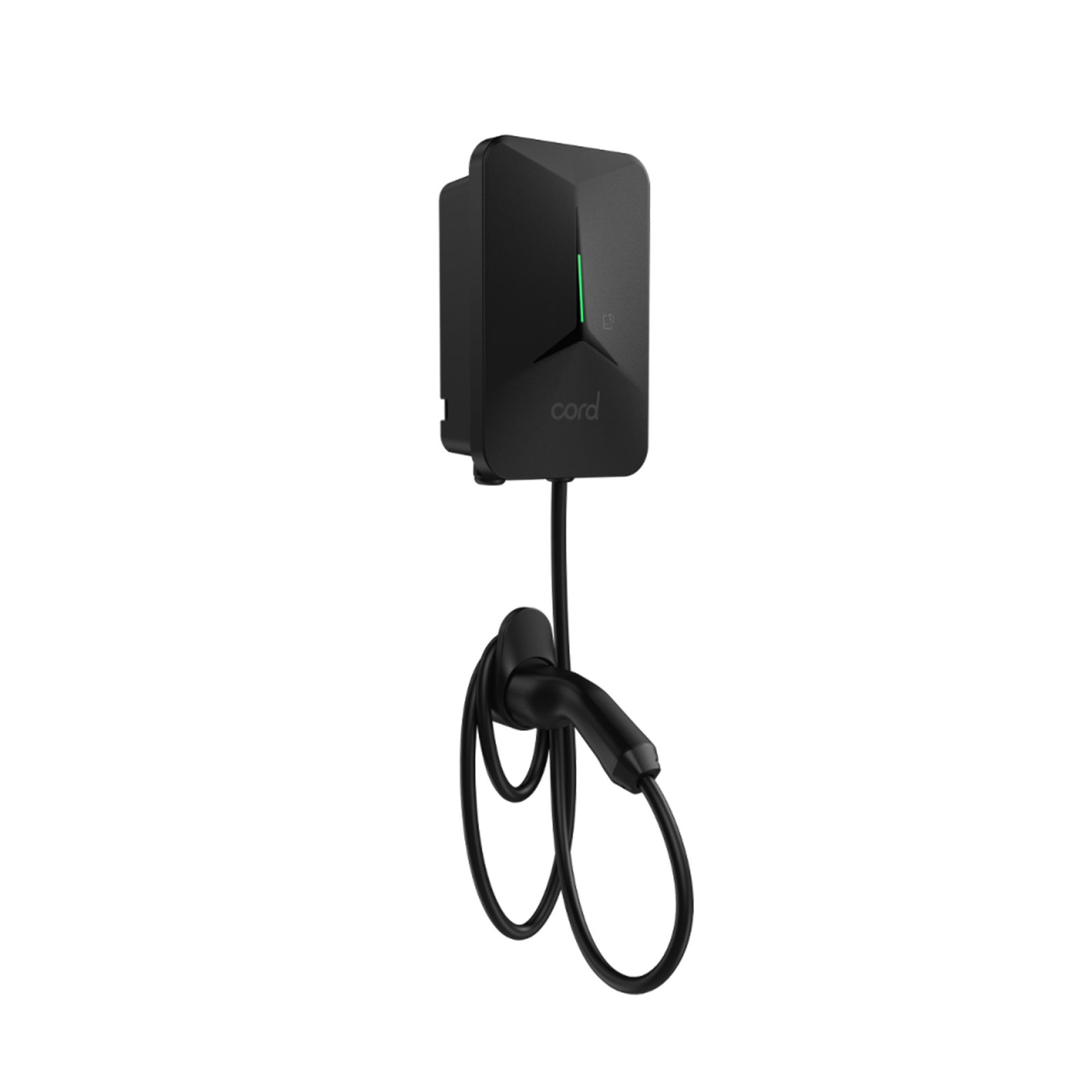
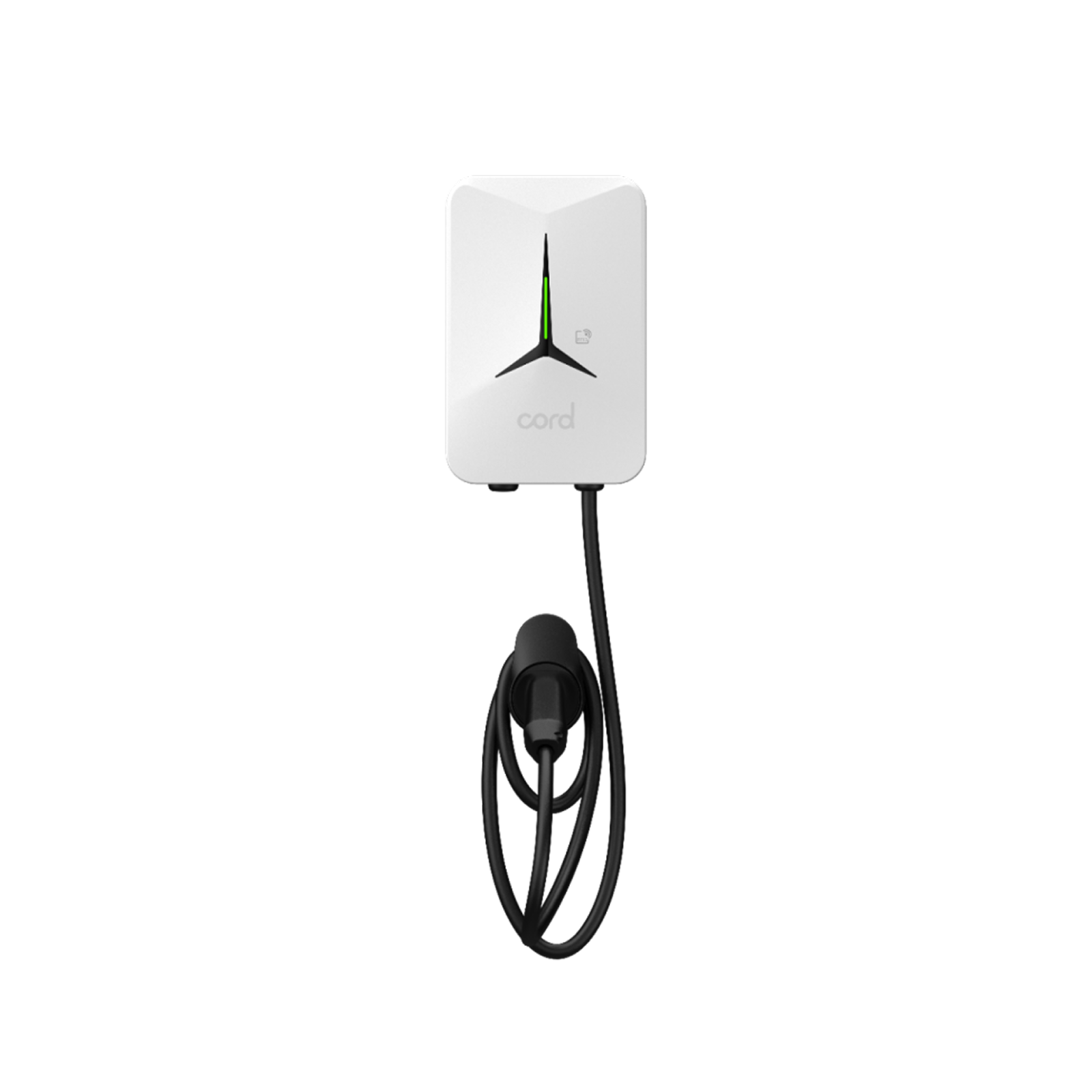
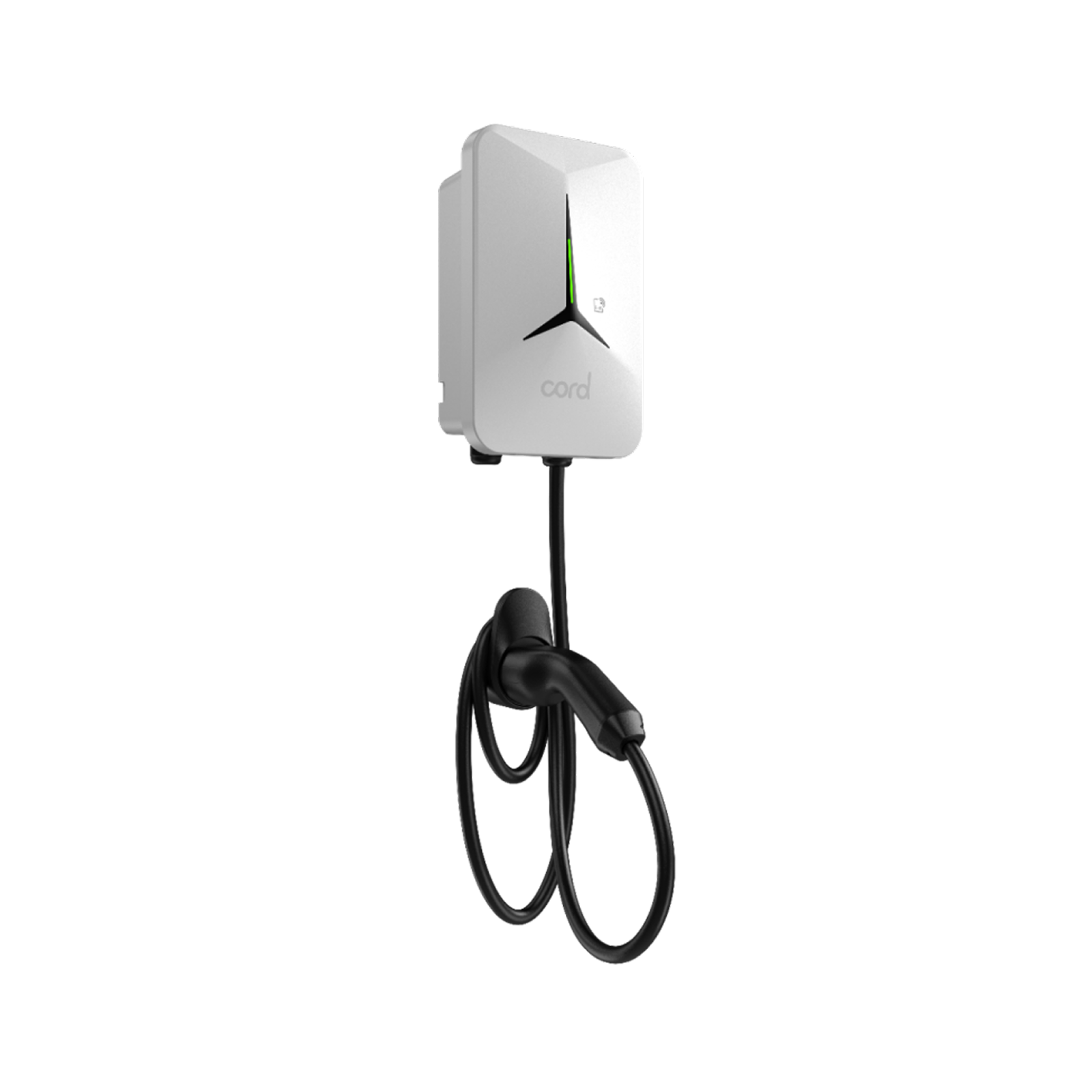
Cord is a UK brand covering both ends of EV charging — the wall charger and the cable that plugs into it. We stock 9 Cord products: the Cord Zero 7.4kW smart home charger, untethered from £435 and tethered from £499 in black or white with a 5m or 8m cable, plus Type 2 charging cables from £105 in straight and coiled versions for 7kW and 22kW, and portable 3-pin chargers from £145. Every Cord Zero has app control over Wi-Fi and 4G and is solar ready. Free UK delivery.
Cord splits into three groups. The Cord Zero is the 7.4kW smart home charger — untethered from £435 in two colours, or tethered from £499 in black or white with a choice of 5m or 8m cable. Cord Type 2 charging cables come in four lengths each, straight from £105 for 7kW and £145 for 22kW, or coiled from £145 and £140 respectively. Cord portable chargers plug into a standard 3-pin socket and deliver up to 2.3kW, at £145 with a 5m lead or £165 with 10m — the backup you keep in the boot rather than an everyday solution.
How much do Cord EV chargers and cables cost?
Cord prices start at £105 for a 7kW Type 2 charging cable and £145 for a portable 3-pin charger. The Cord Zero untethered is £435 and the tethered version £499, both including free UK delivery. That makes the Zero one of the better-value smart home chargers on the market, sitting below the Easee One (£482), Pod Point Solo 3S (£465) and Ohme ePod (£496) while still offering app control, 4G connectivity and solar readiness. Compare it against the full 7kW home charger range.
What is the Cord Zero?
The Cord Zero is a 7.4kW single-phase smart charger designed for straightforward home charging. It connects over both Wi-Fi and 4G, which matters more than it sounds — a charger on a detached garage or at the far end of a driveway often cannot hold a house Wi-Fi signal, and a unit with 4G as a fallback keeps working where a Wi-Fi-only charger goes offline. The app handles scheduling, energy tracking and remote management, and the charger is solar ready, so it can use surplus generation if you have panels now or add them later. Tethered versions come in black or white with a 5m or 8m cable.
Which Cord charging cable do I need?
Match the cable to your supply, not your car. If you have a standard single-phase home supply, a 7kW (230V 32A) cable is correct and costs from £105. If you are charging at 22kW on a three-phase supply — typically at a workplace or public charge point — you need the 22kW (380V 32A) cable from £145, which also works on single-phase. A 22kW cable is the safer buy if you charge away from home regularly. Both come in four lengths; 5m suits most driveways, and longer runs are worth it if the parking space is not directly beside the charger. See all EV charging cables.
What is the difference between a coiled and a straight charging cable?
A coiled cable retracts on itself, so it stays off the ground and takes up far less space when stored — useful if the cable lives in the boot or the charge point is close to the car. A straight cable is easier to handle in cold weather, reaches its full stated length without tension, and is generally lighter for the same rating. Coiled versions are £140 for 22kW and £145 for 7kW. If the cable is going to be plugged and unplugged twice a day, most people prefer straight; if it needs to be tidied away every time, coiled.
What is a portable EV charger for?
A portable Cord charger plugs into an ordinary 3-pin domestic socket and charges at up to 2.3kW, with adjustable 6A, 8A and 10A settings so you can dial it down on older wiring. At roughly a third of the speed of a 7kW wall charger, it is not an everyday solution — it is what gets you home from a relative's house, a holiday cottage or a site with no charge point. Available with a 5m lead at £145 or 10m at £165. See all portable EV chargers.