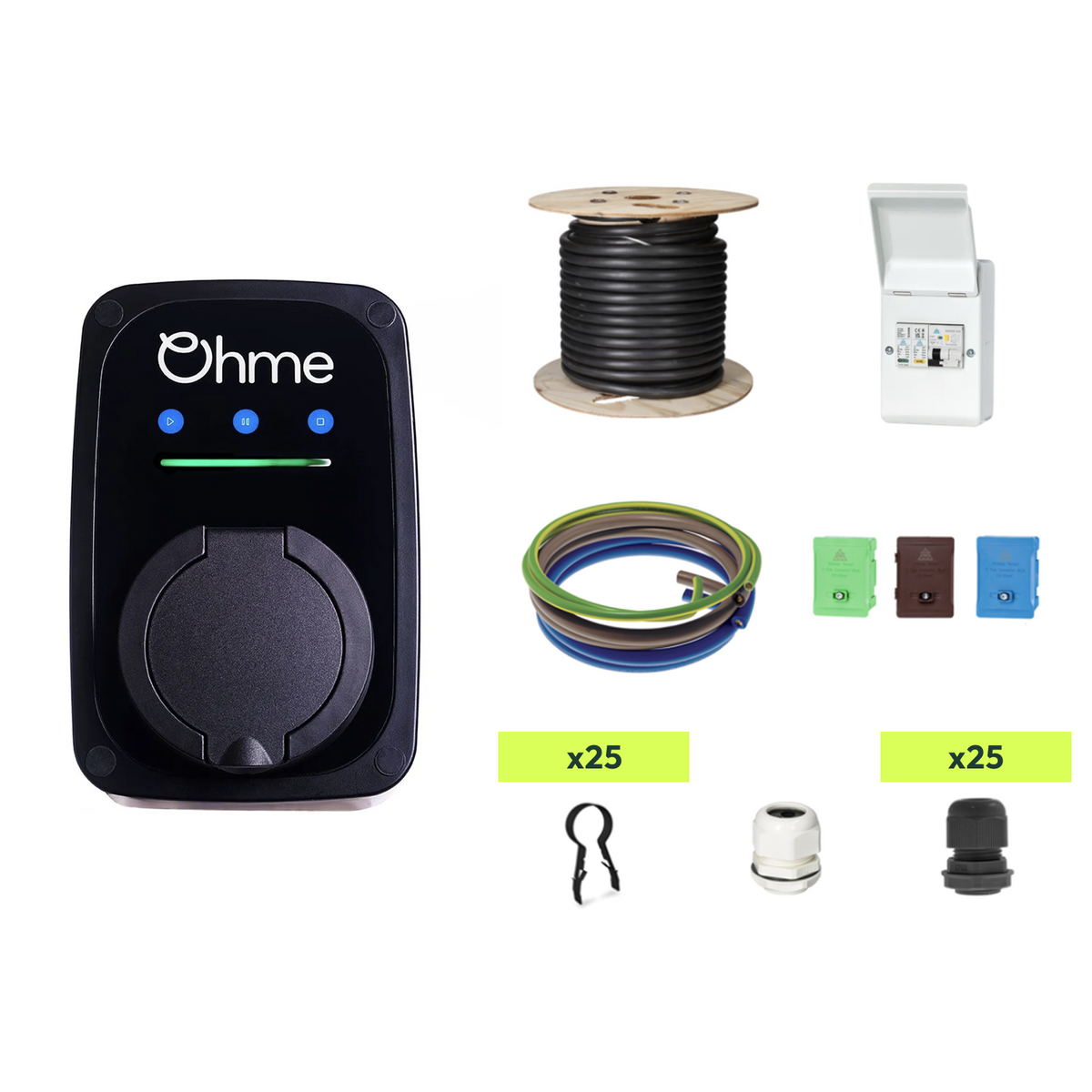
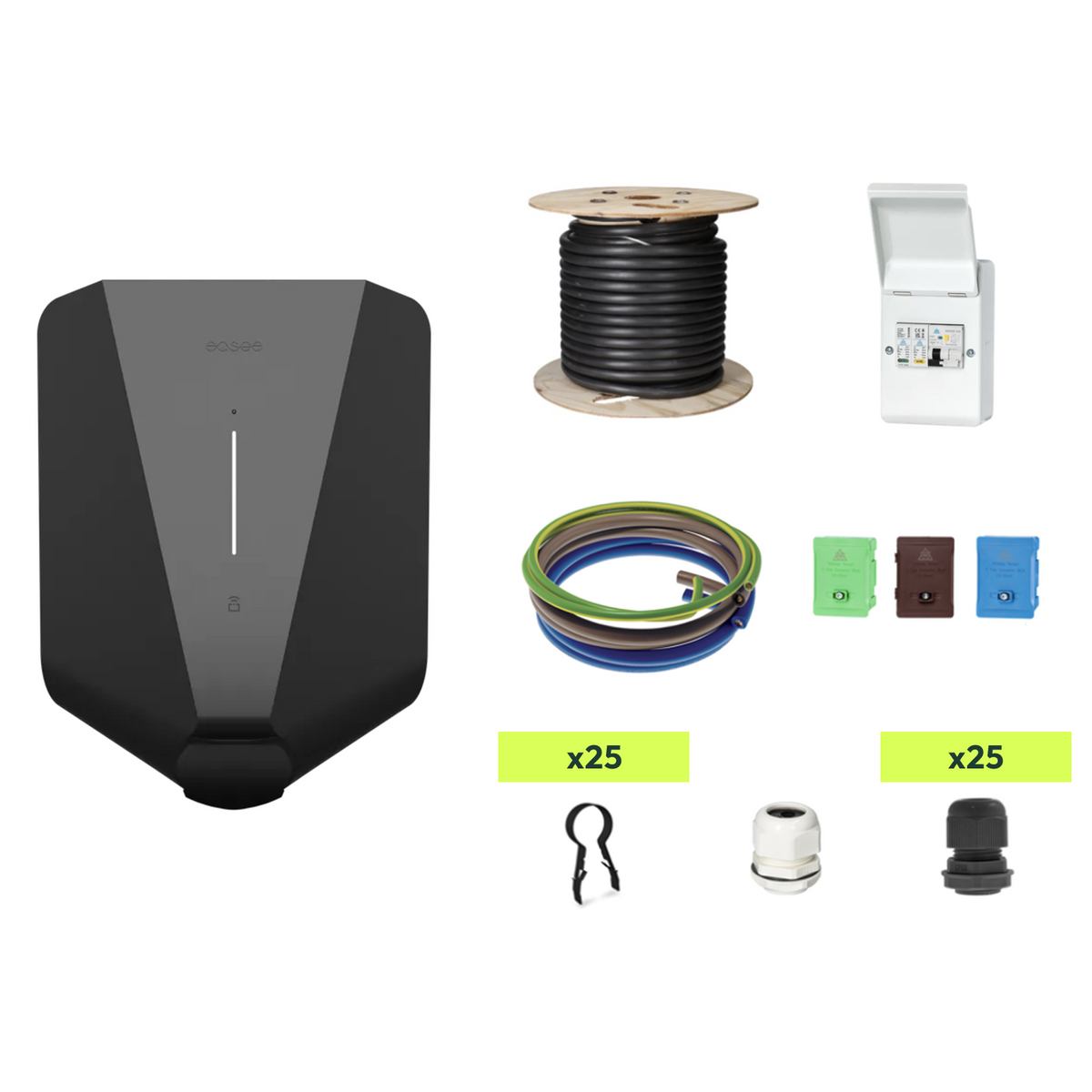
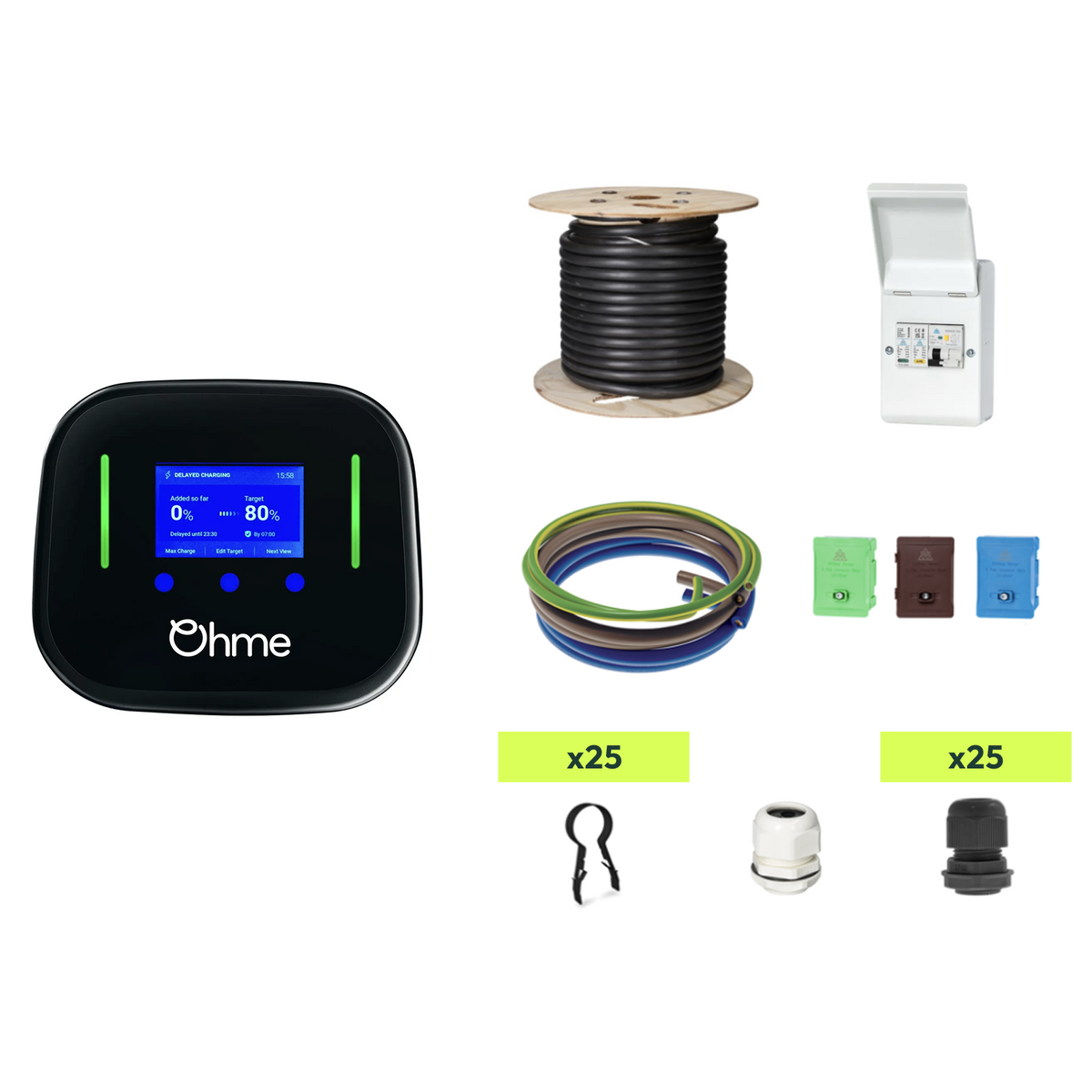
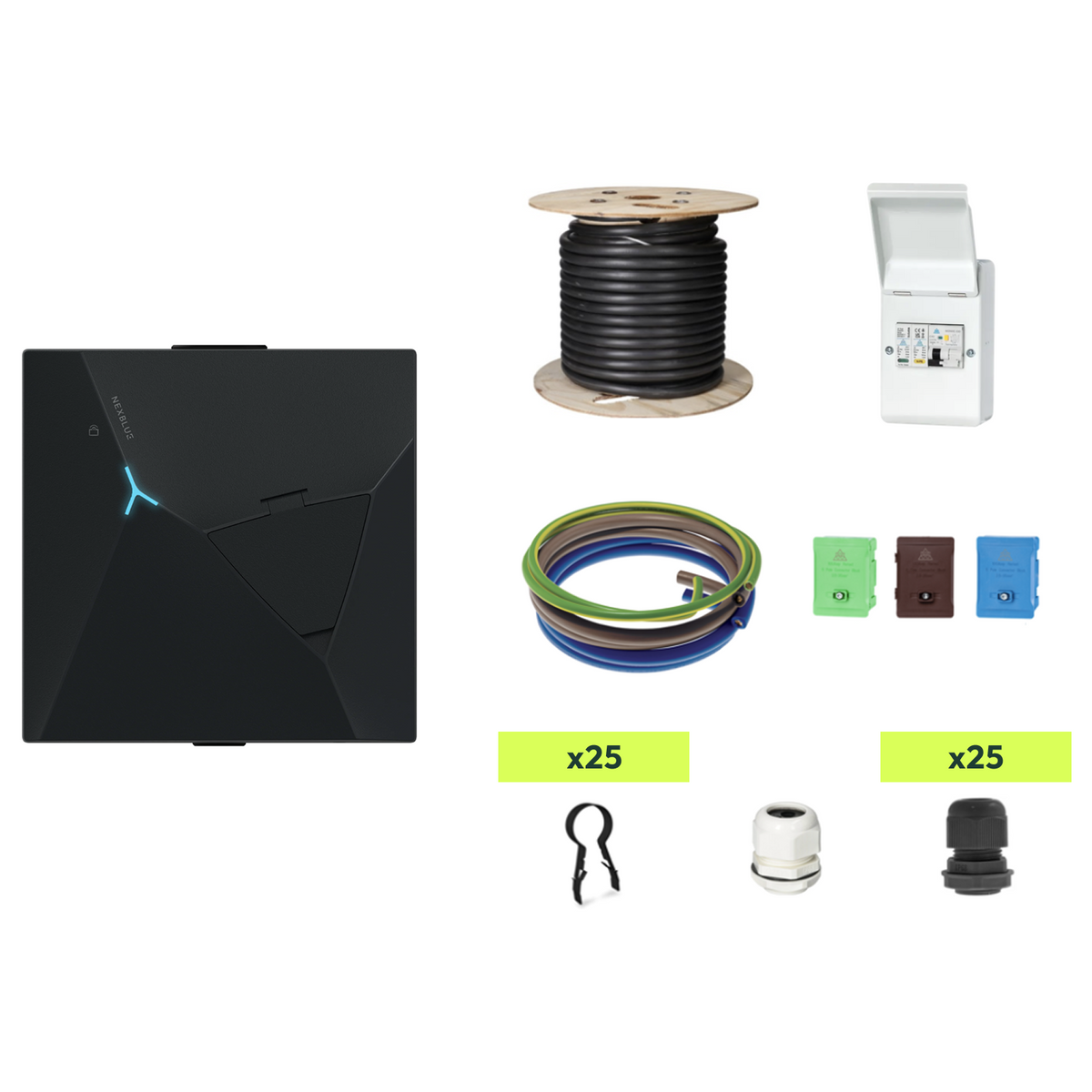
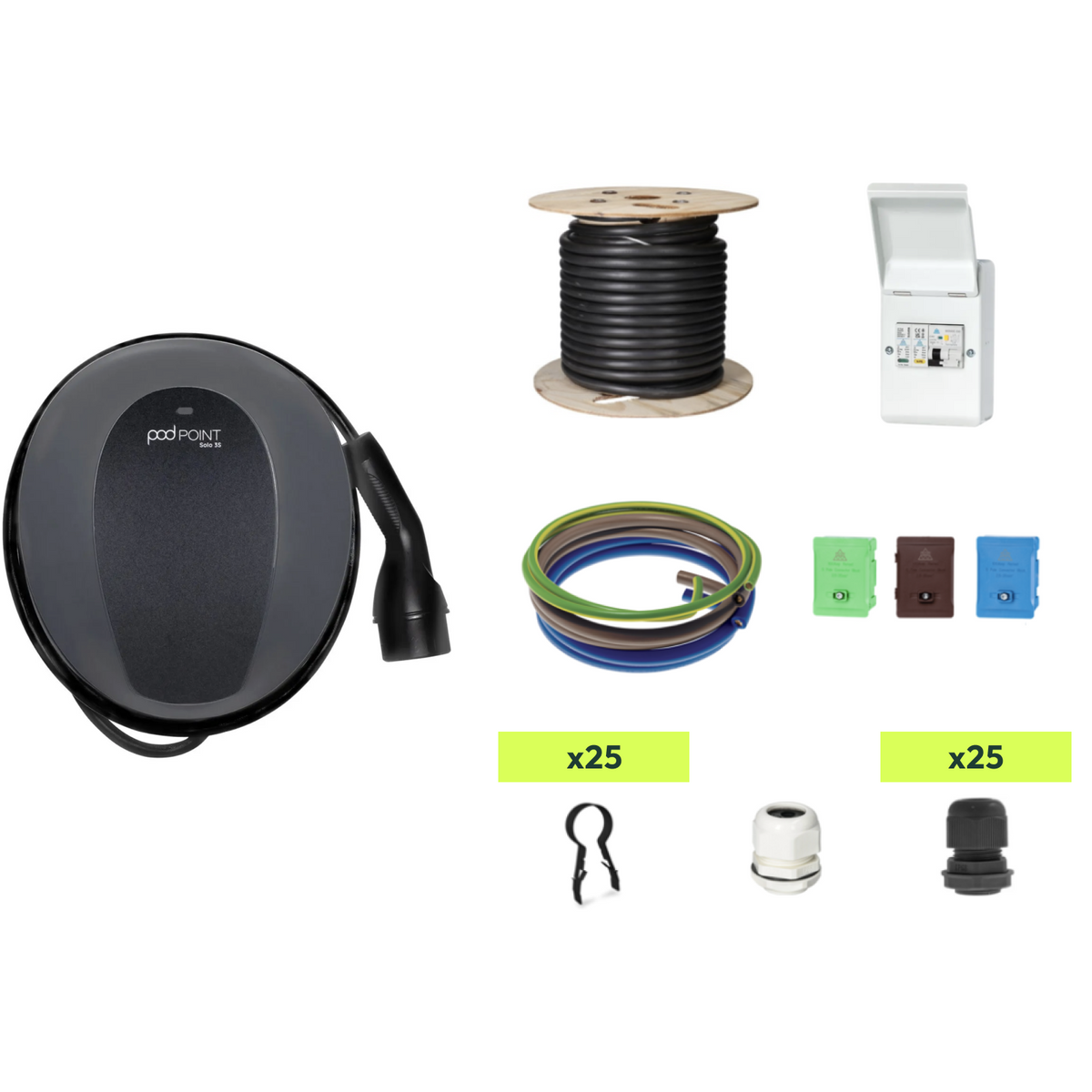
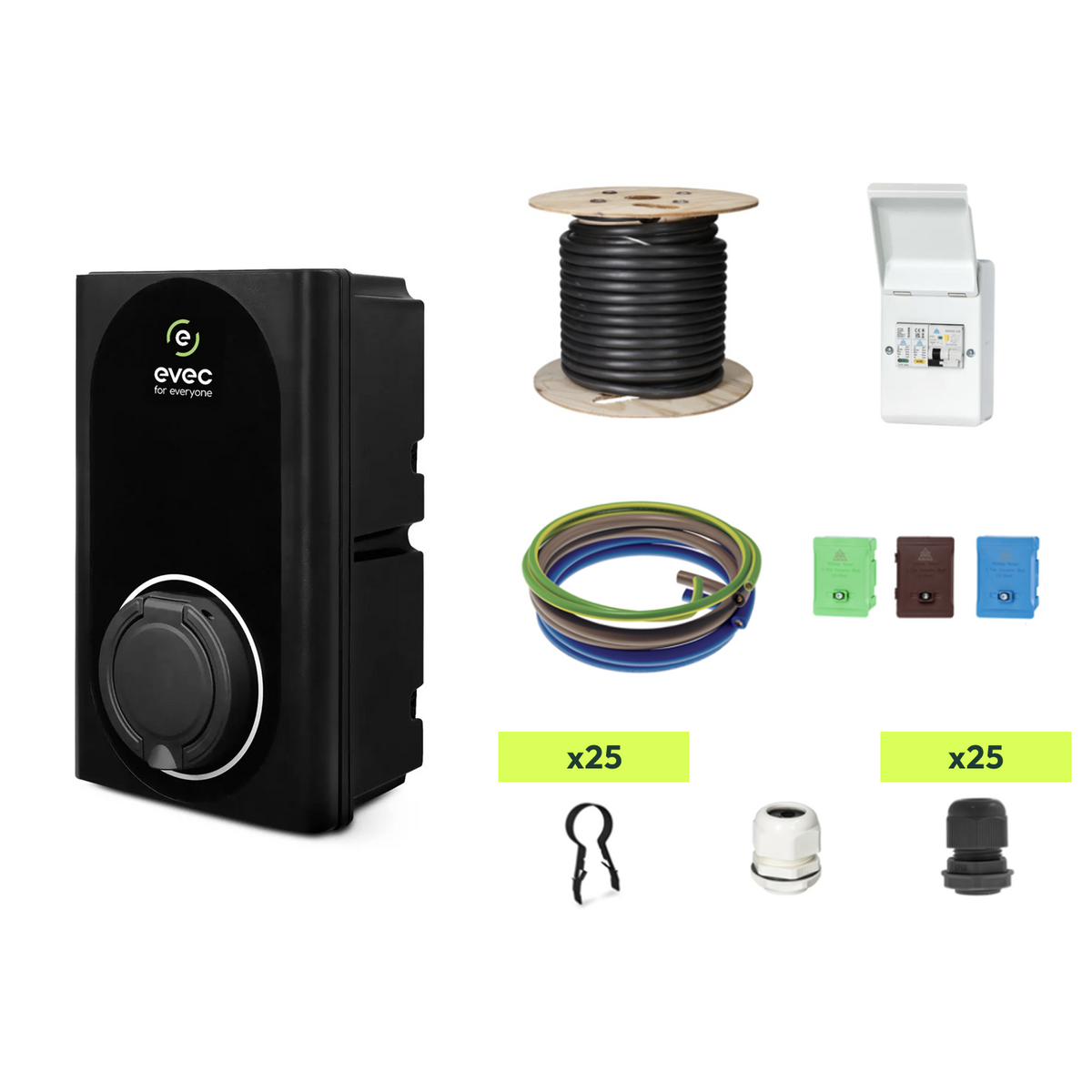
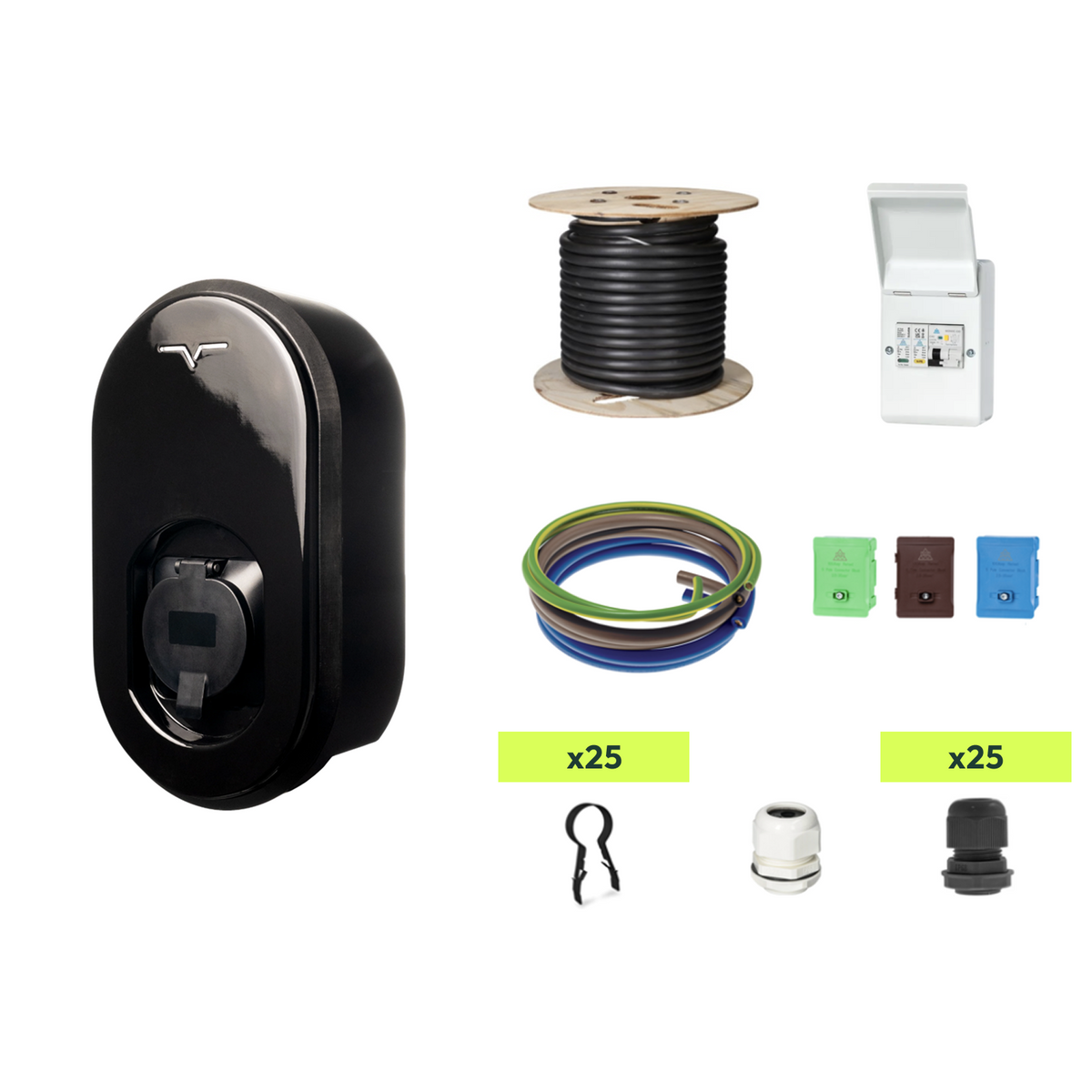
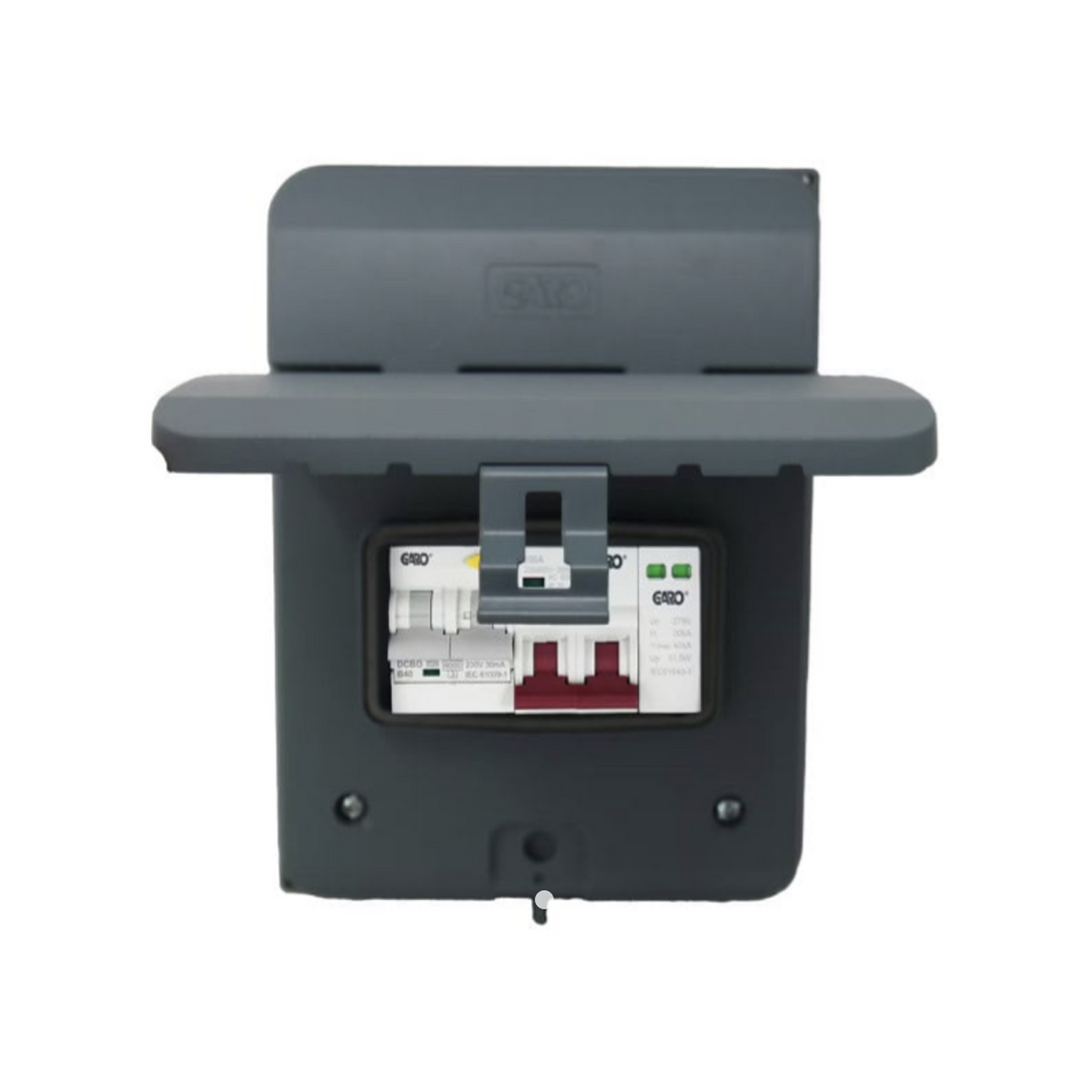
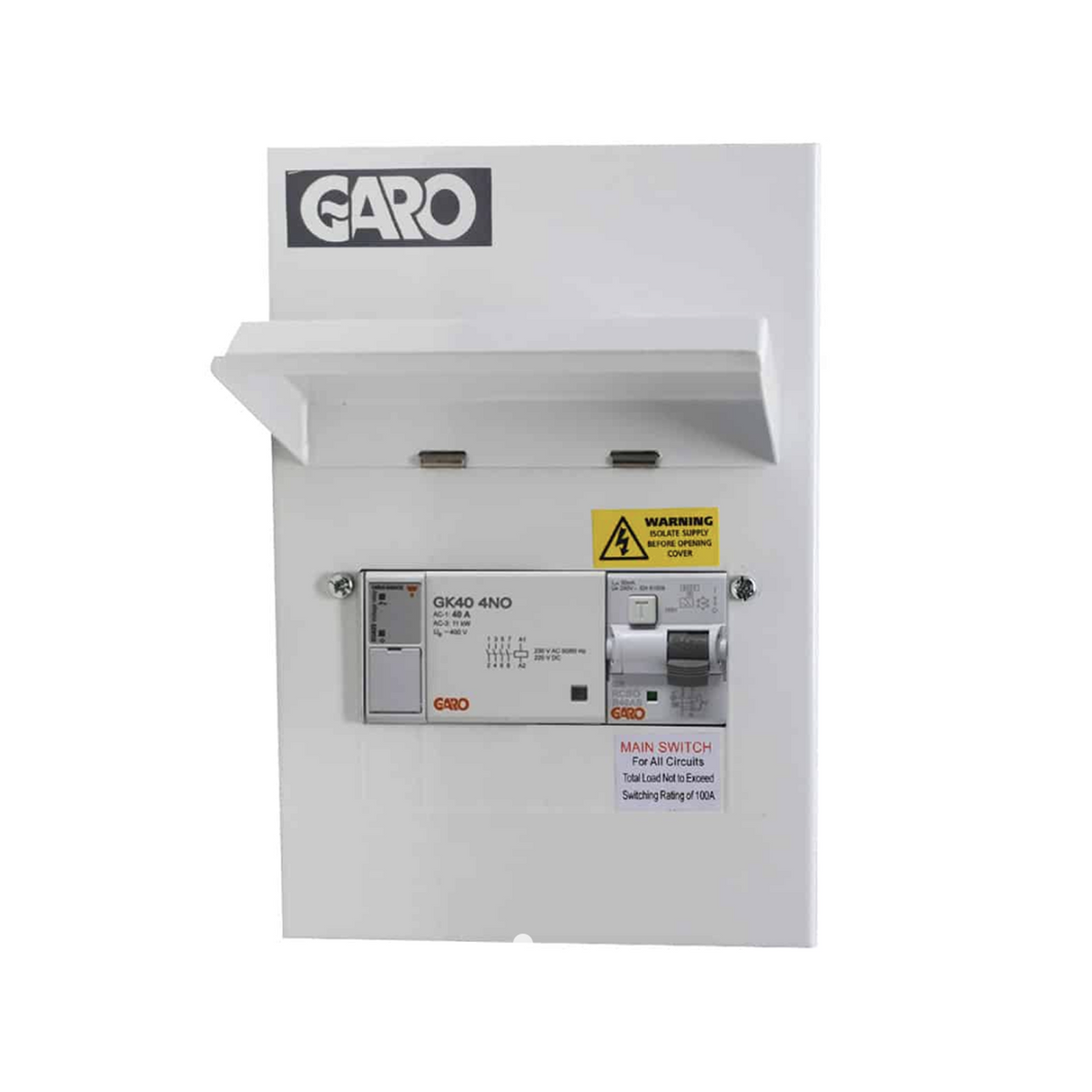
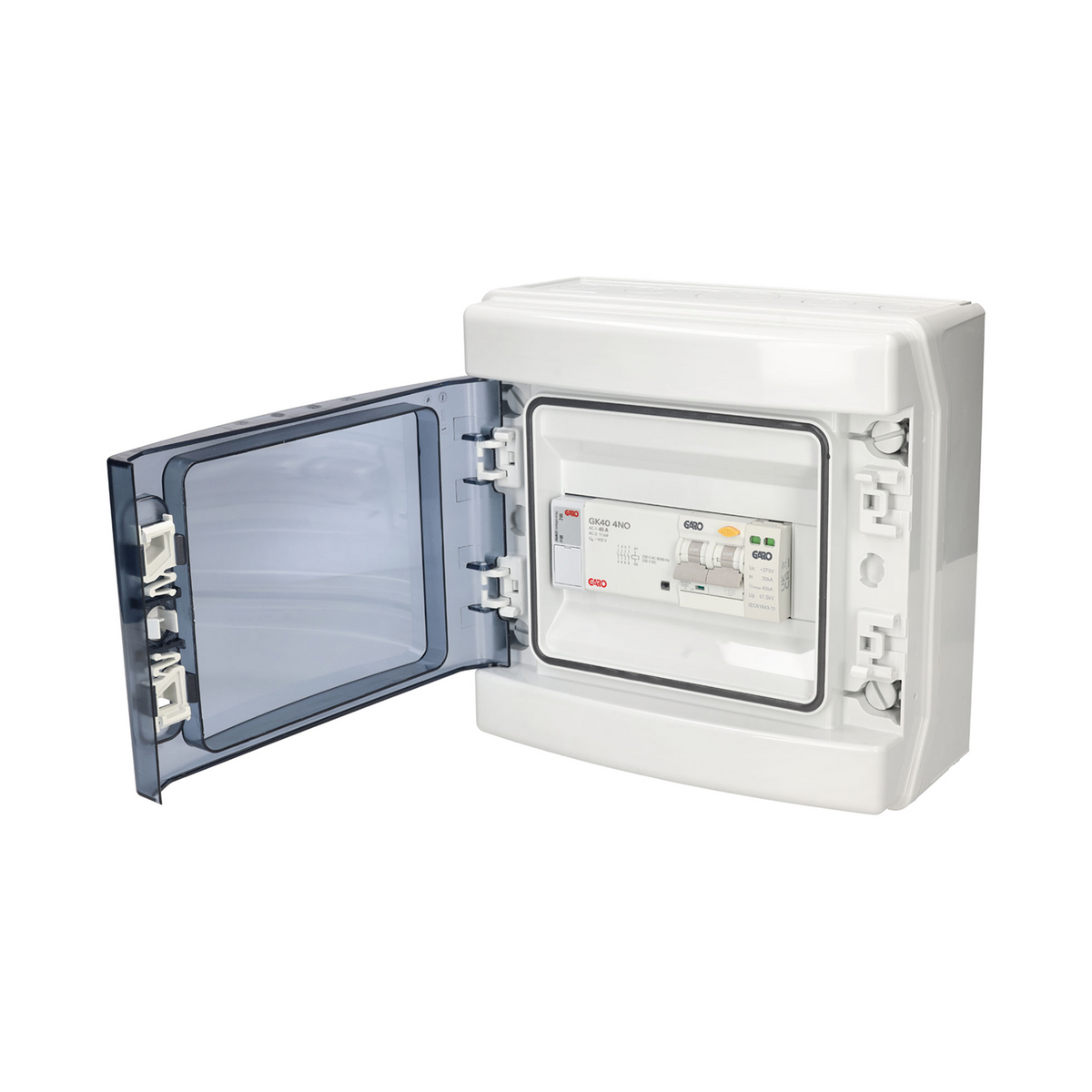
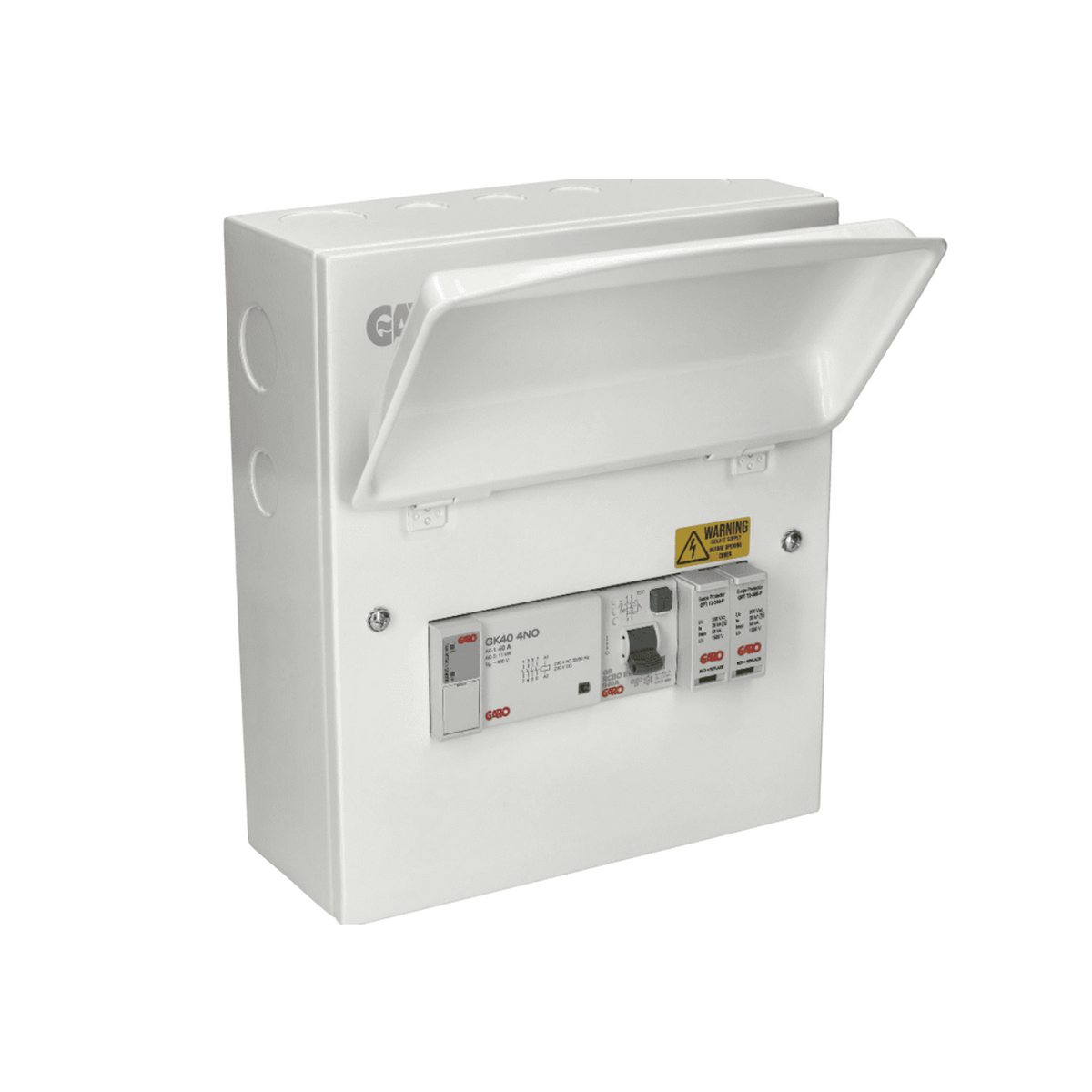
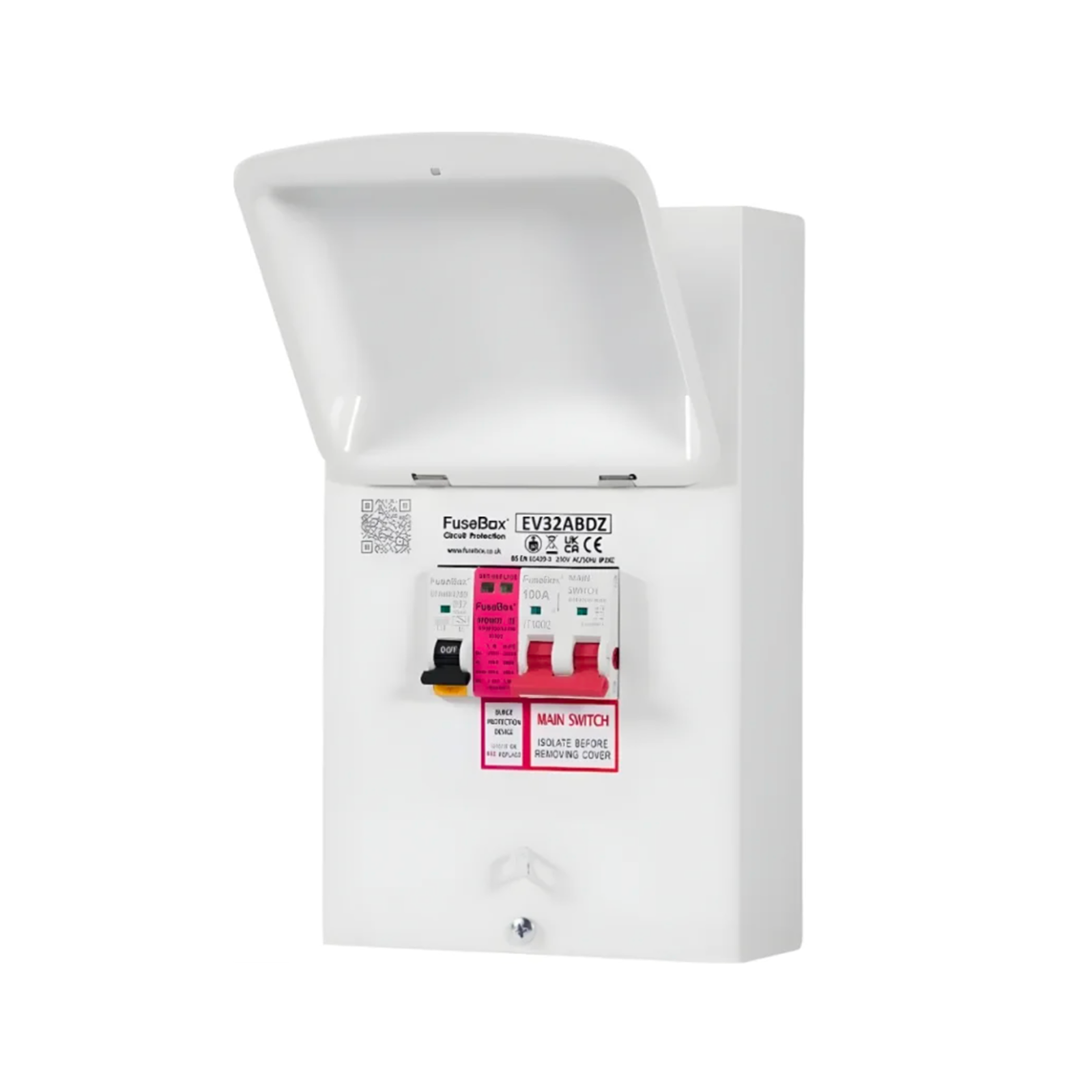
Installer equipment covers the electrical parts of an EV charge point installation — the protection, connection and containment that sits between the incoming supply and the charger. We stock 4 products from £72: the FuseBox EV32ABDZ 32A bi-directional consumer unit (£72), Lewden PRO65-REV40AS 40A Type A weatherproof unit (£92), Lewden PRO-REV40BS 40A Type B unit (£250) and our EV installation kit bundling the parts for a standard domestic install (from £145). Free UK delivery on all trade orders.
What equipment does an EV charger installation need?
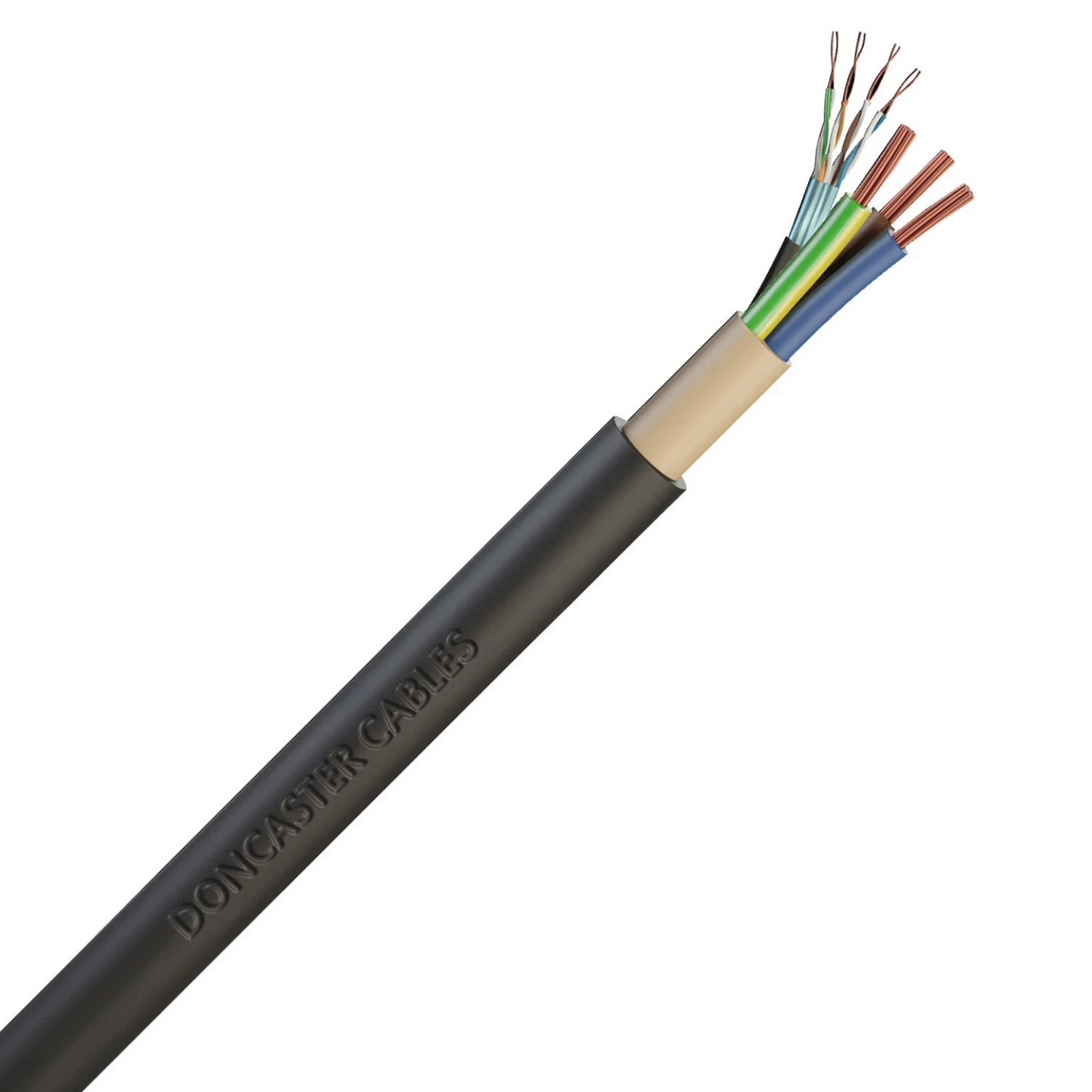
Beyond the charger itself: a dedicated protective device sized to the circuit, usually in its own consumer unit; surge protection; suitably rated cable and glands; containment for the run; and, where supply capacity is tight, a load management device. Whether an earth rod is needed depends on the charger — most modern units include PEN fault protection, which removes it. Our EV installation kit bundles the parts most installers reach for on a standard single-phase domestic job.
Do you supply installers on trade terms?
Yes — we supply EV installers, electrical contractors and facilities teams across the UK, with free delivery and trade pricing on chargers as well as installation equipment. If you fit chargers regularly, get in touch about account pricing rather than ordering at list. We also stock the posts, mounting plates and foundations that freestanding installations need, so a whole job can come from one order rather than three suppliers.
Which consumer unit should I specify?
It depends on the charger's internal protection. Where the charger provides 6mA DC protection — as most current smart chargers do — a Type A device upstream is sufficient, so the FuseBox EV32ABDZ (£72, 32A, bi-directional) or Lewden PRO65-REV40AS (£92, 40A, weatherproof die-cast) will cover it. Specify the Lewden Type B unit (£250) only where the charger requires it. On properties with solar or battery storage, a bi-directional device is the safer long-term choice. See all EV consumer units.
Does an EV charger need an earth rod?
Usually not any more. Most modern chargers — including Sevadis, Teltonika, Deta, Easee, Indra and Sync Energy models — have PEN fault detection built into the unit, which removes the need for a separate earth electrode on a TN-C-S supply. That is a meaningful saving in time and disruption on a domestic install. Always confirm against the specific charger's specification, since it determines both the earthing arrangement and what protective devices are required upstream.
What certification applies to EV charger installations?
EV charge point installation is notifiable electrical work and must be carried out by a competent, qualified electrician who certifies the installation on completion. For any customer claiming the OZEV grant, the installer must also be OZEV-authorised, as the grant is applied for by the installer rather than the customer. Read our EV charger installation guide and the 2026 grants guide for the current requirements.