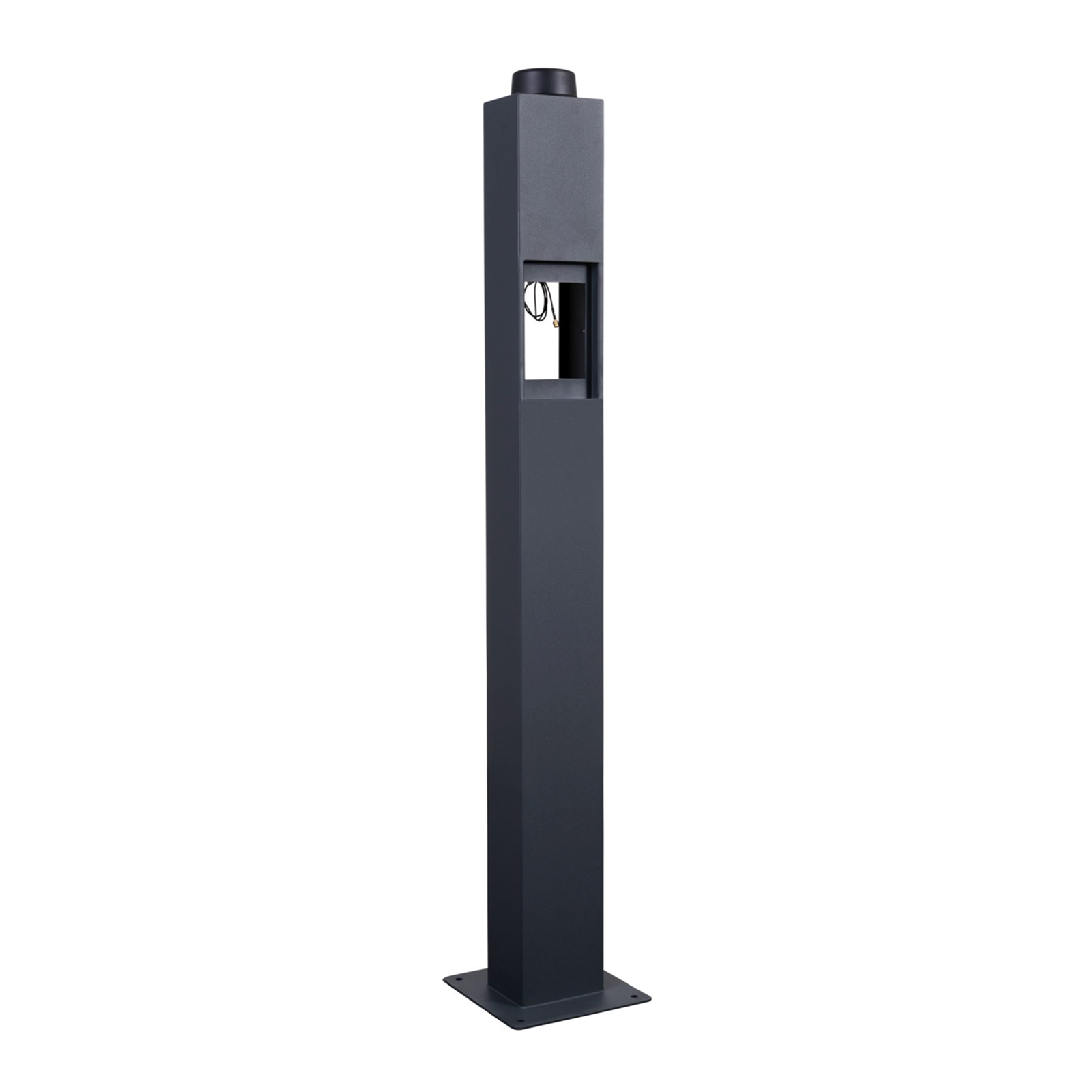
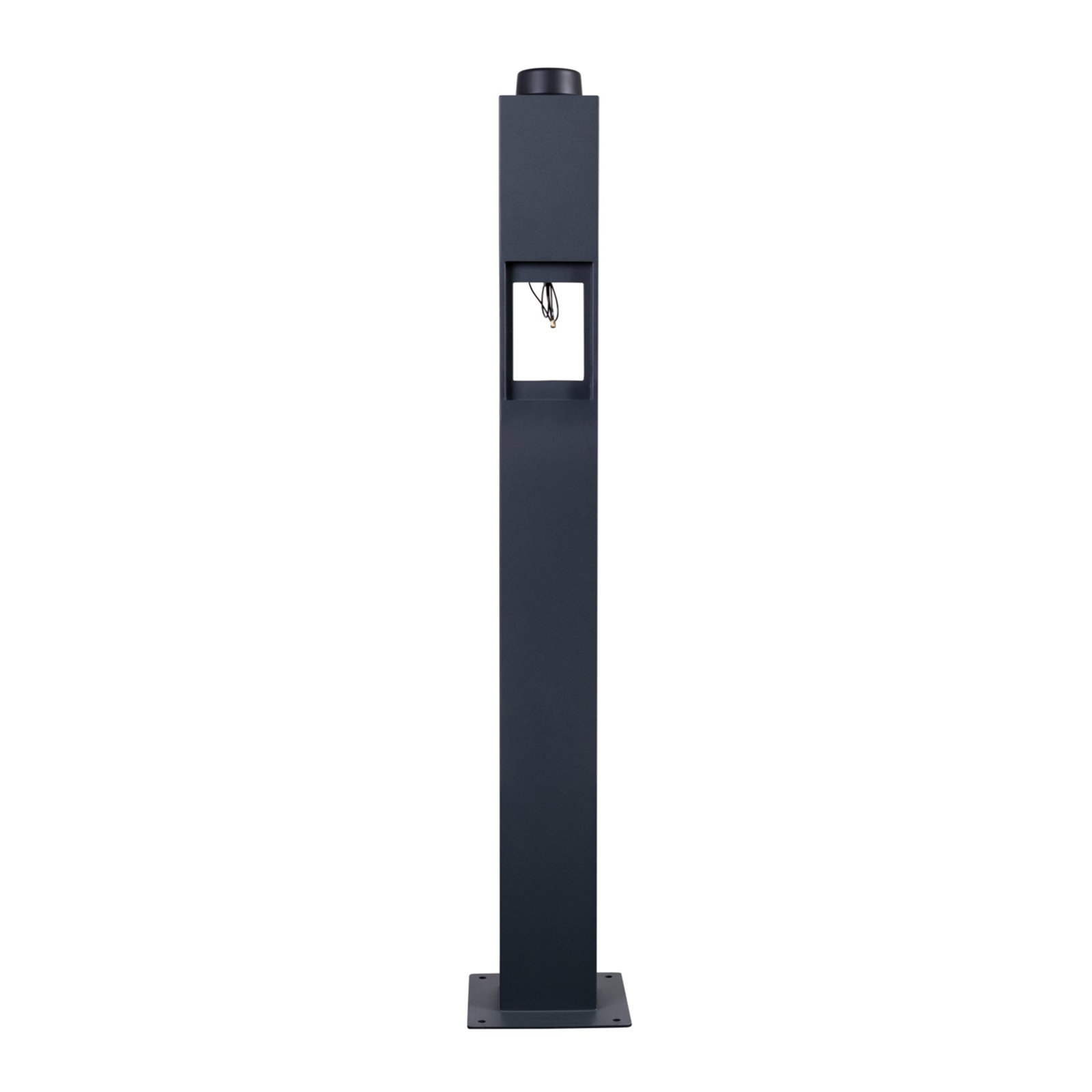
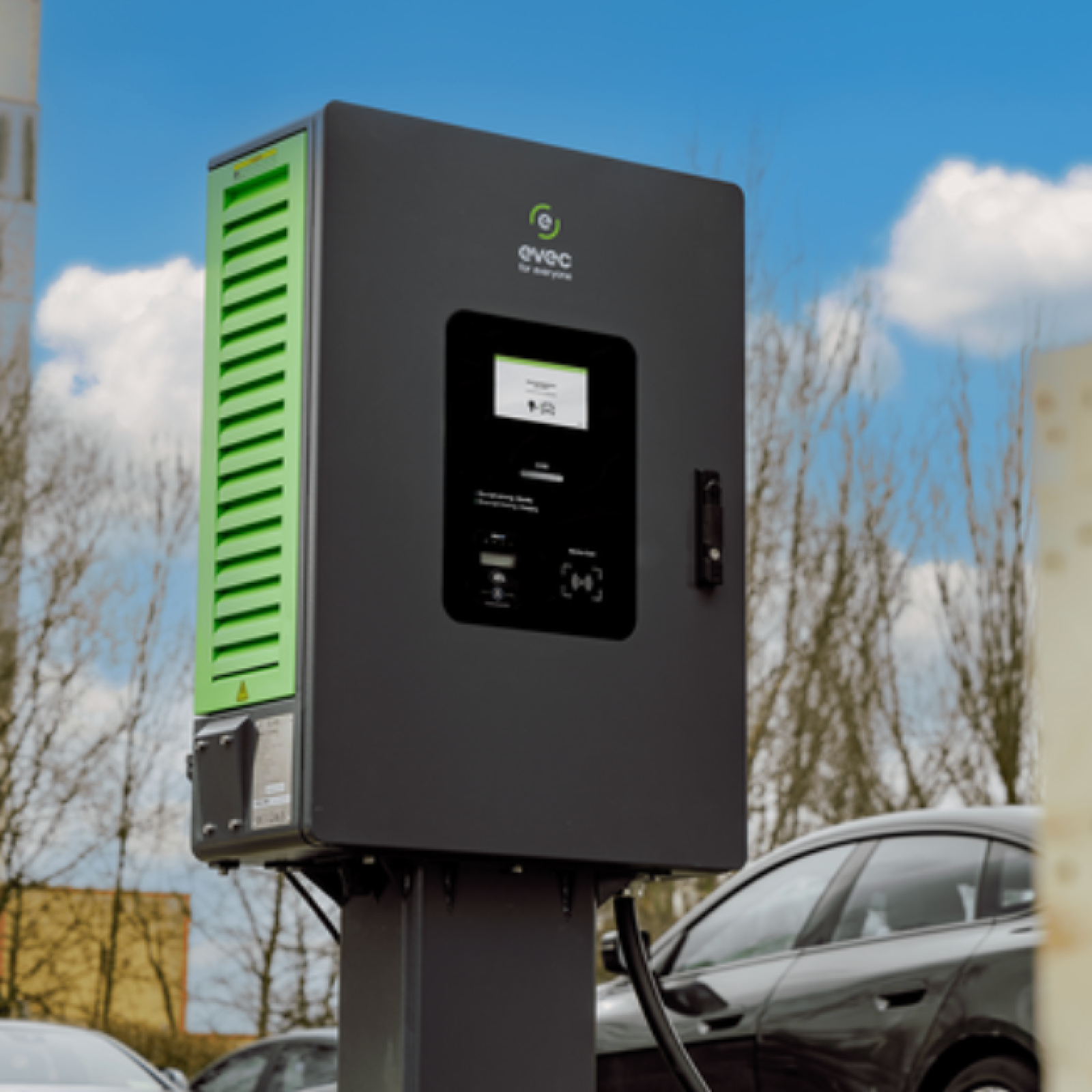
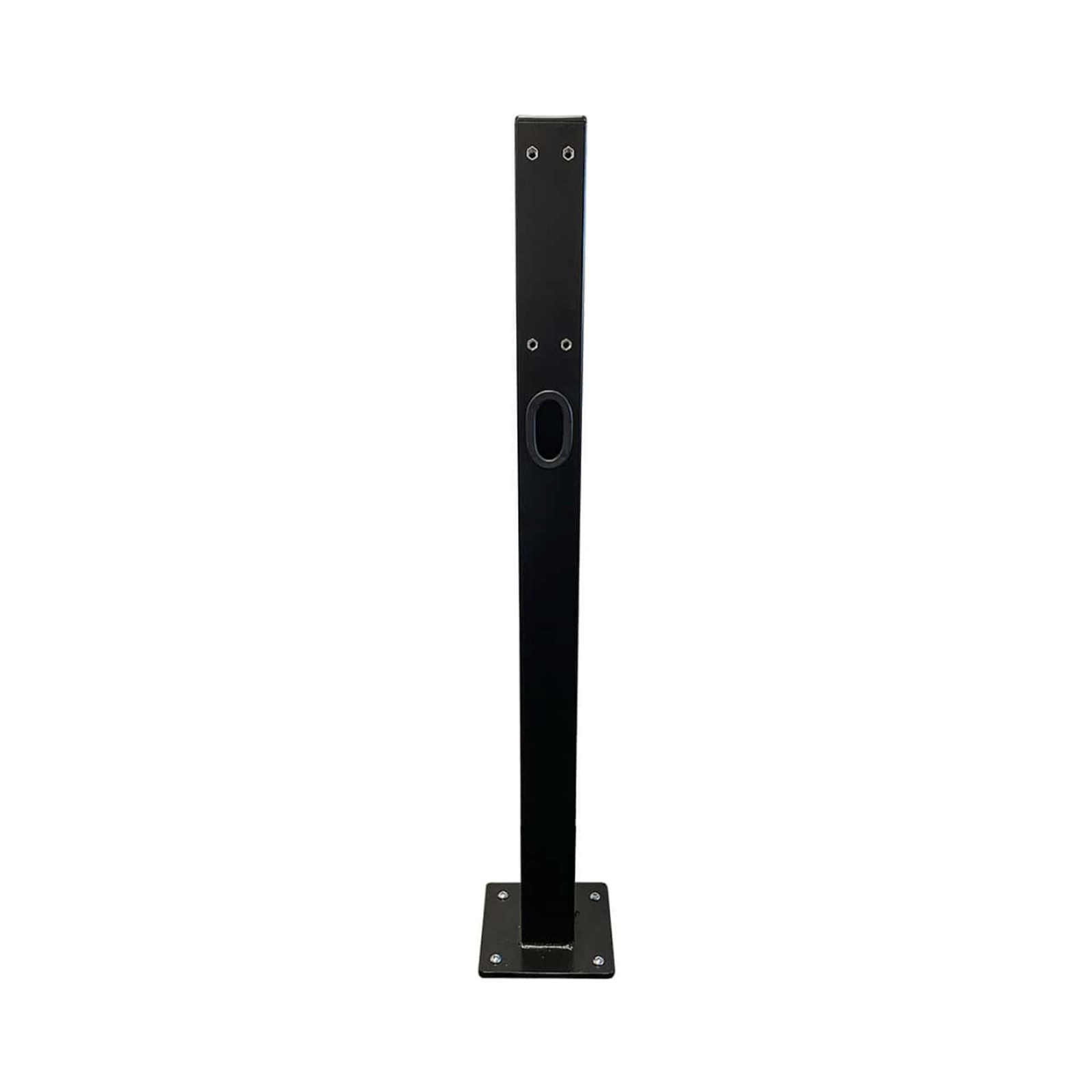
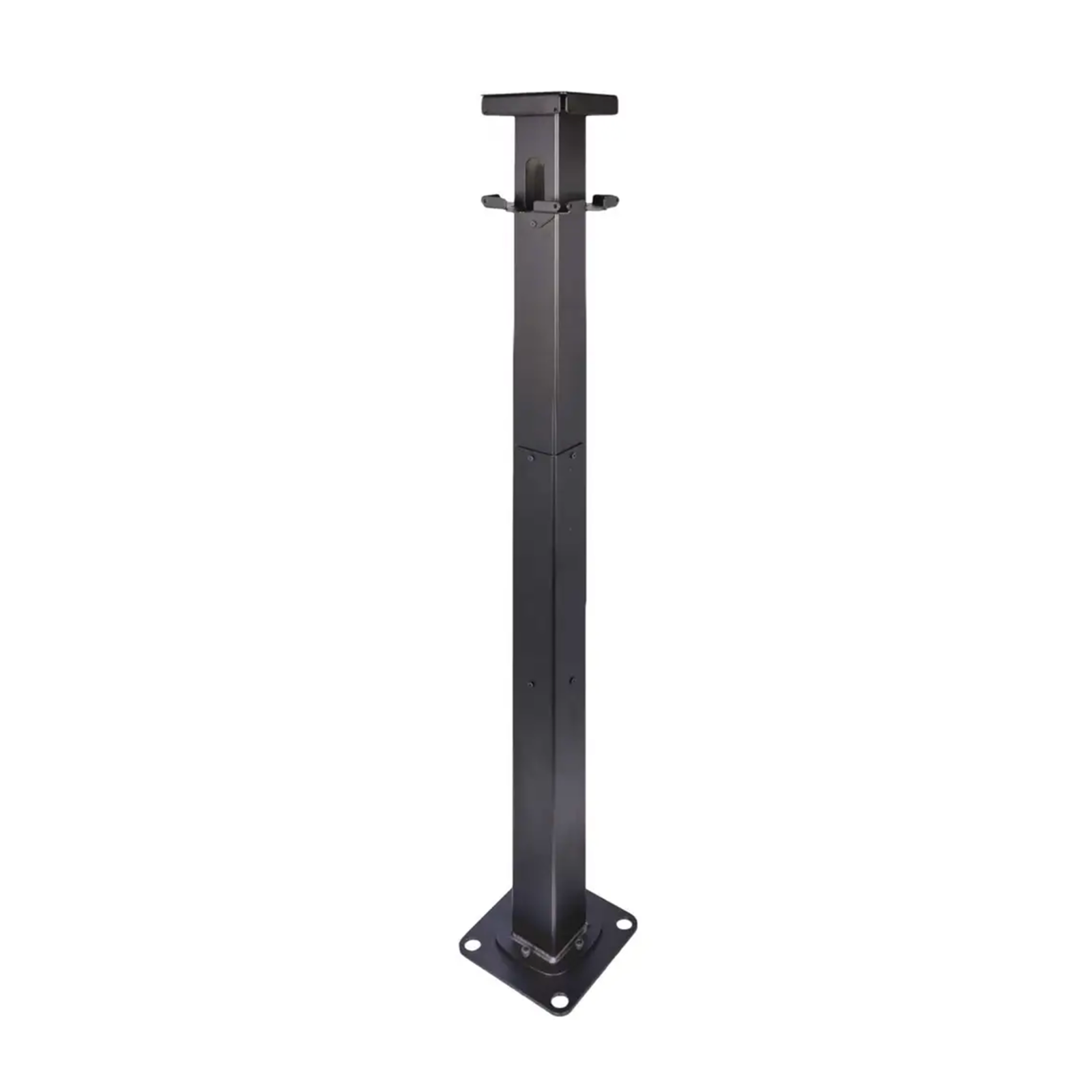
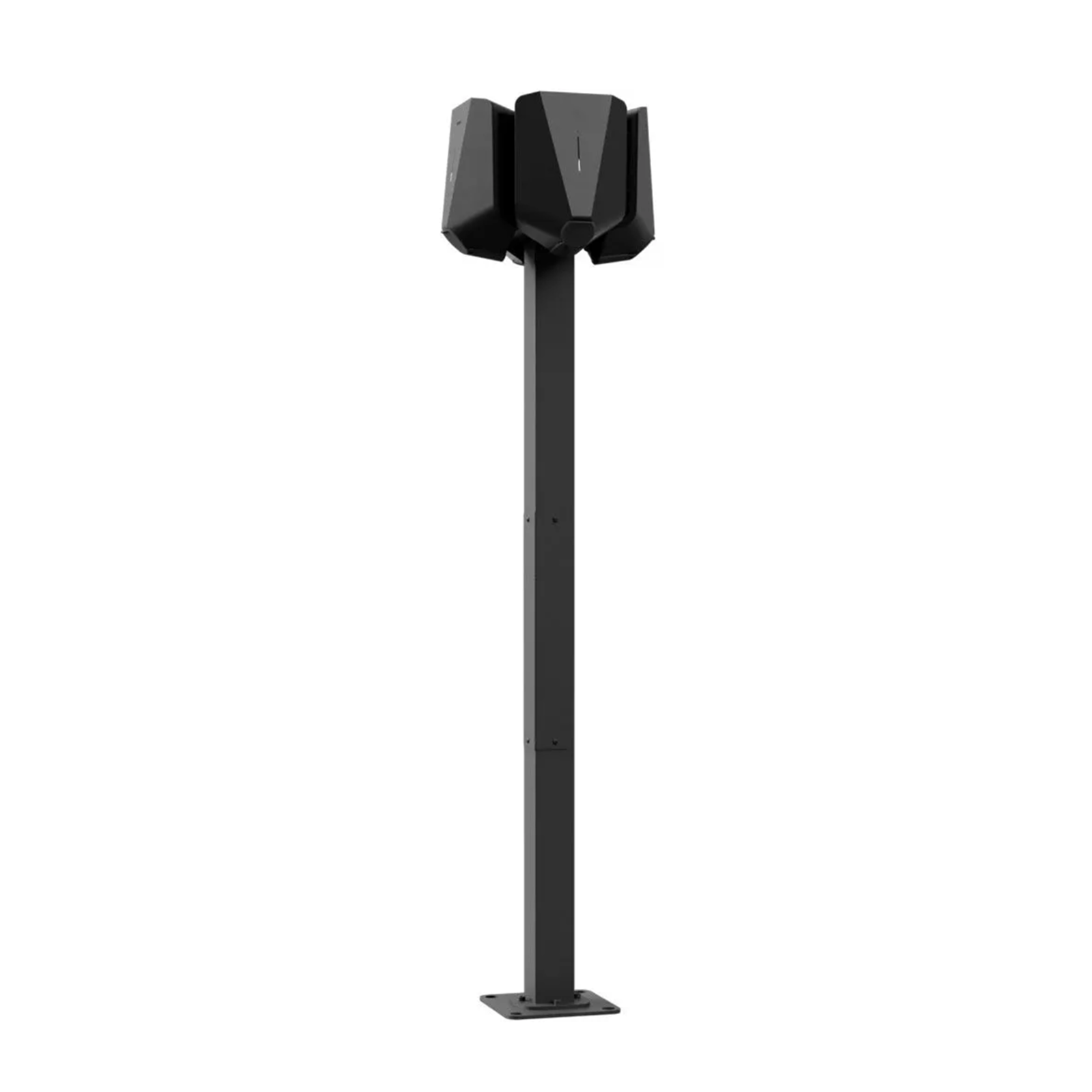
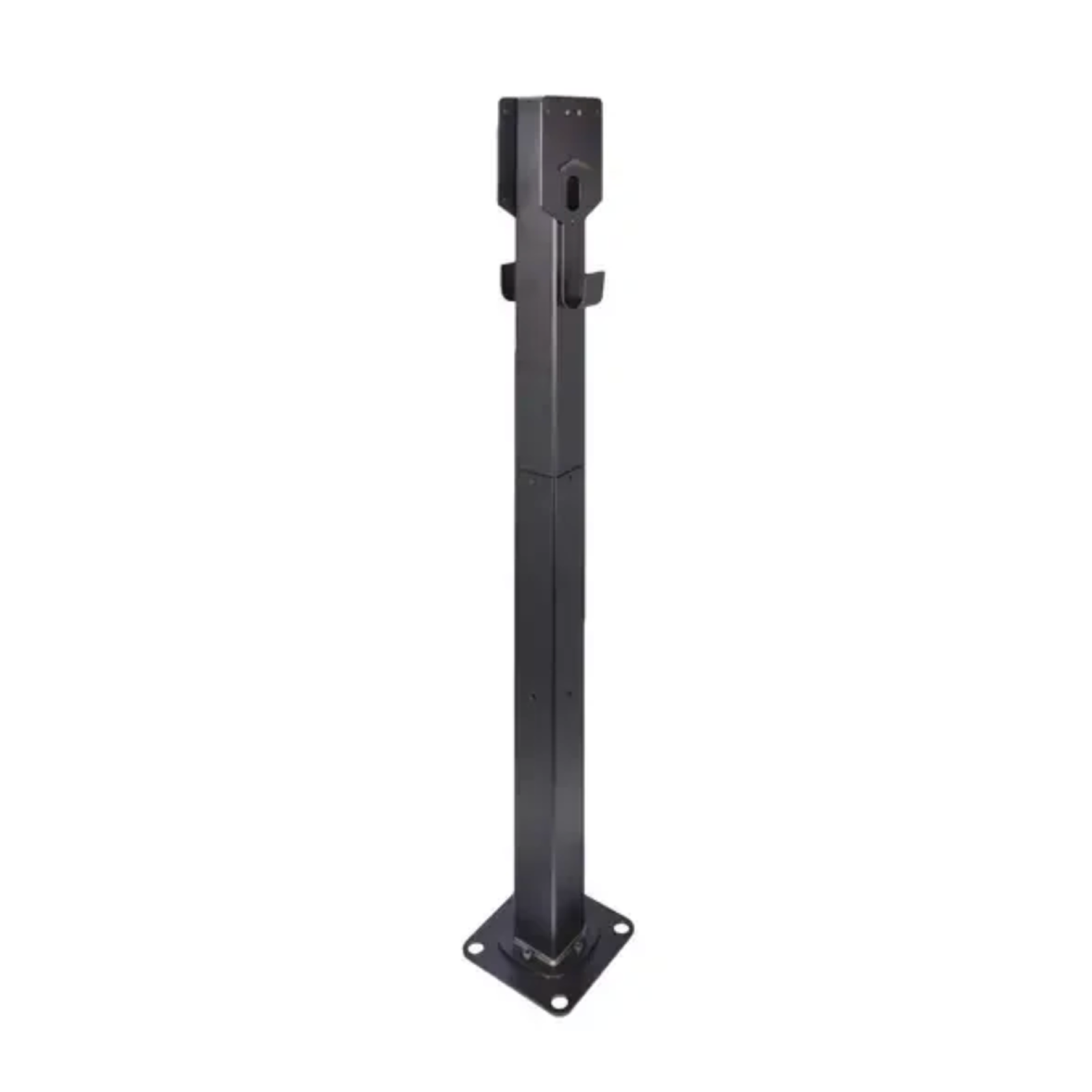
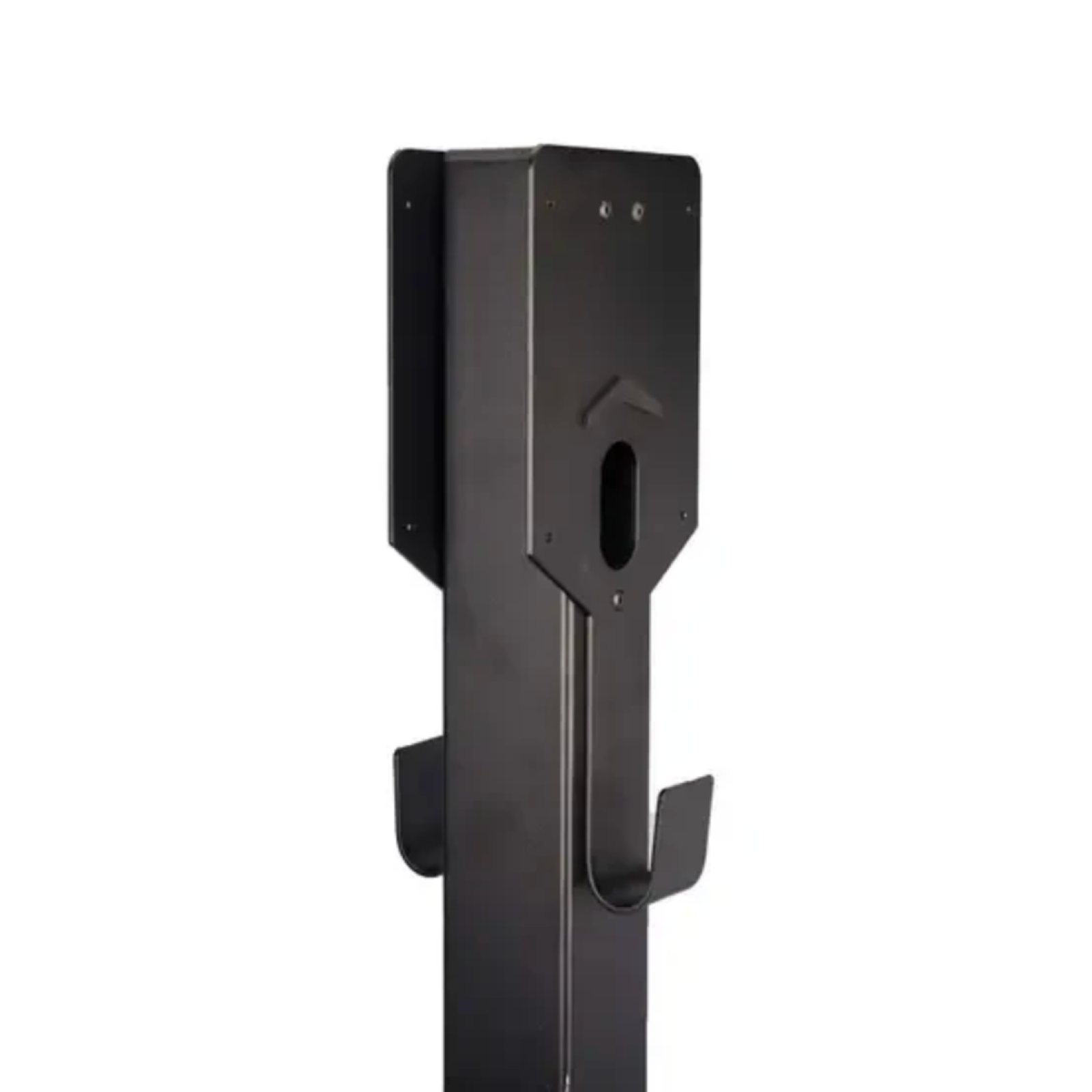
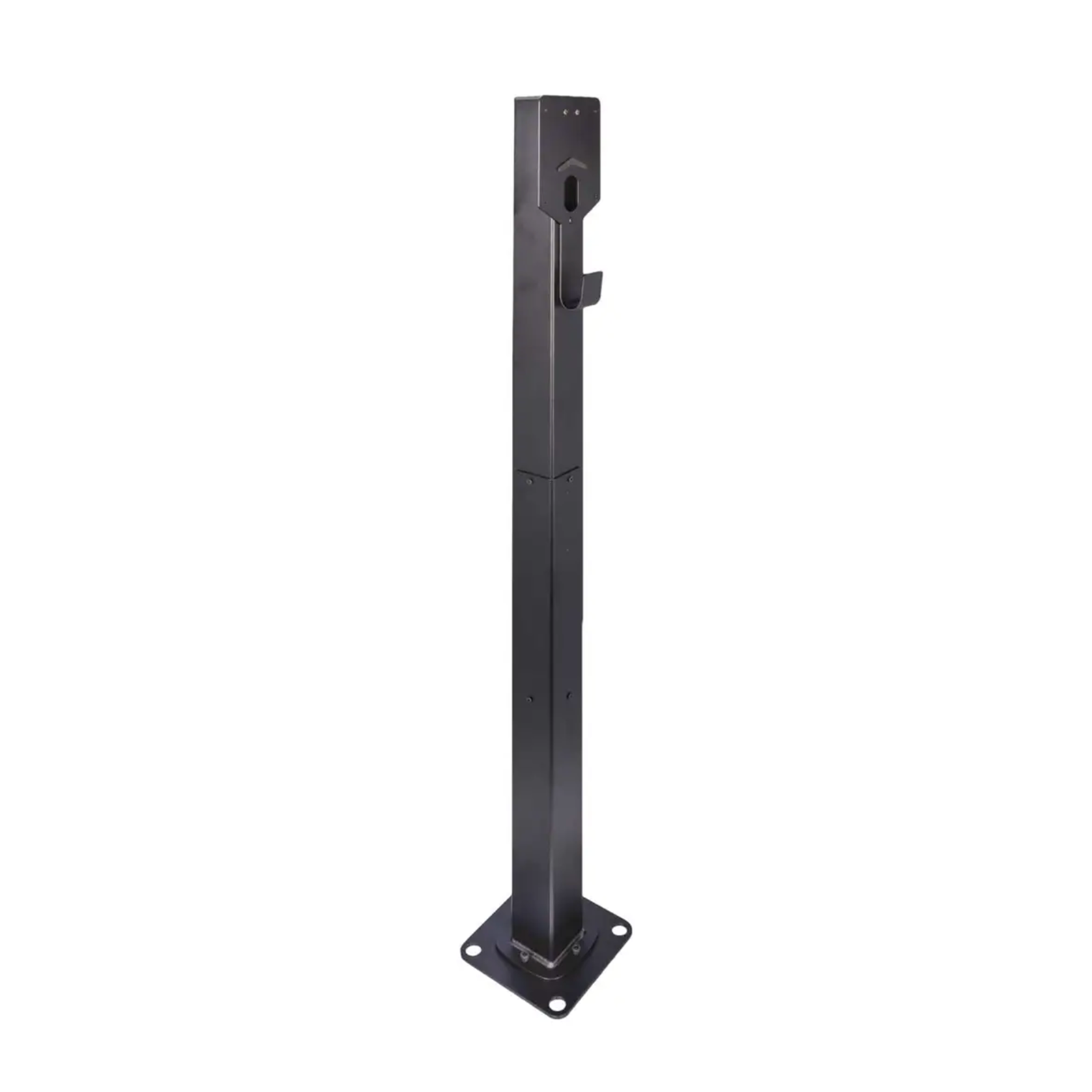
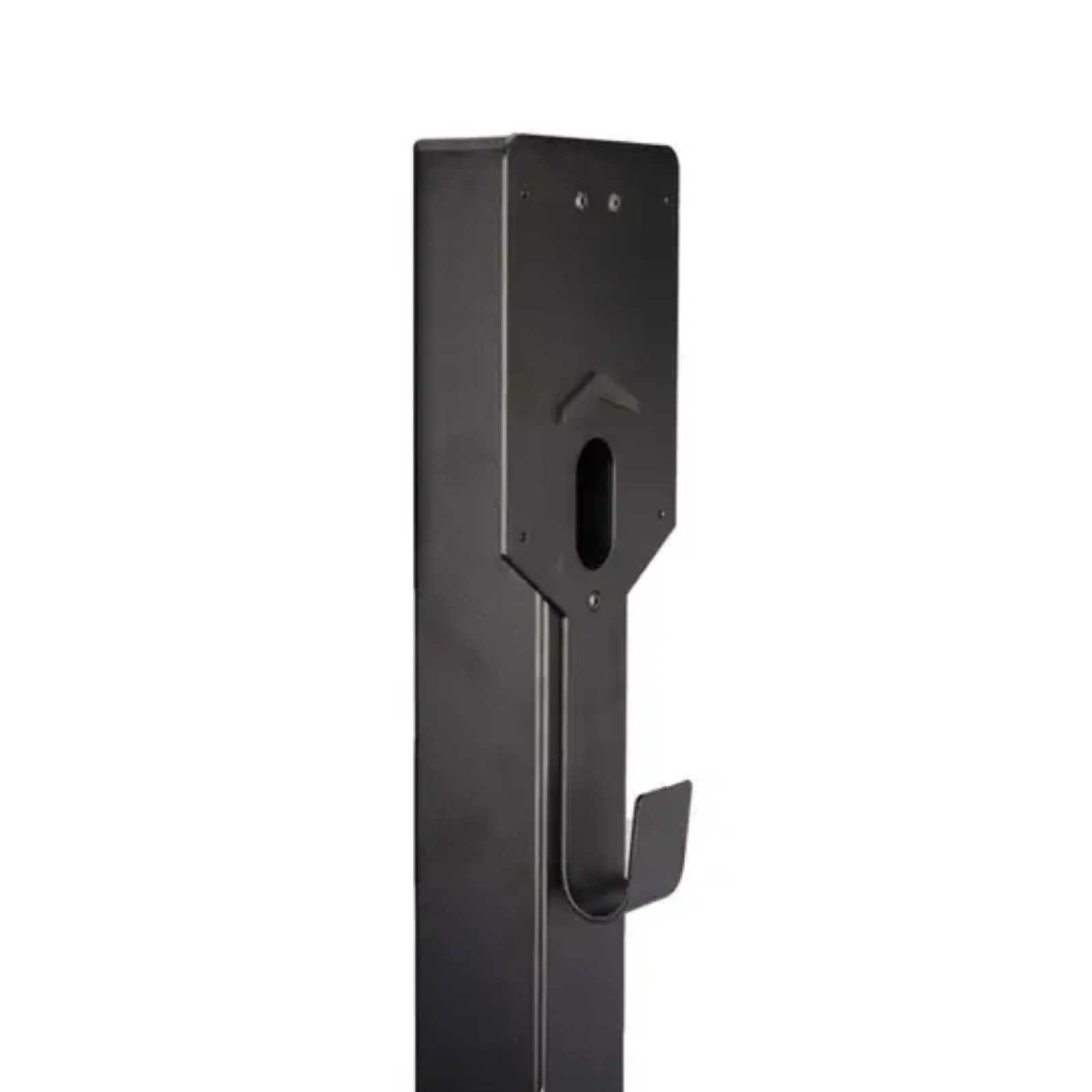
EV charging posts mount a charger where there is no wall — in the middle of a car park bay, on an open driveway or anywhere a wall run would be long and visible. We stock 14 posts from £240, covering single, dual, back-to-back and four-way configurations, plus dedicated posts for Easee, NexBlue and Evec chargers and a universal post for card payment terminals. Most are UK-made from 304 stainless steel with a weatherproof black powder-coated finish. Free UK delivery.
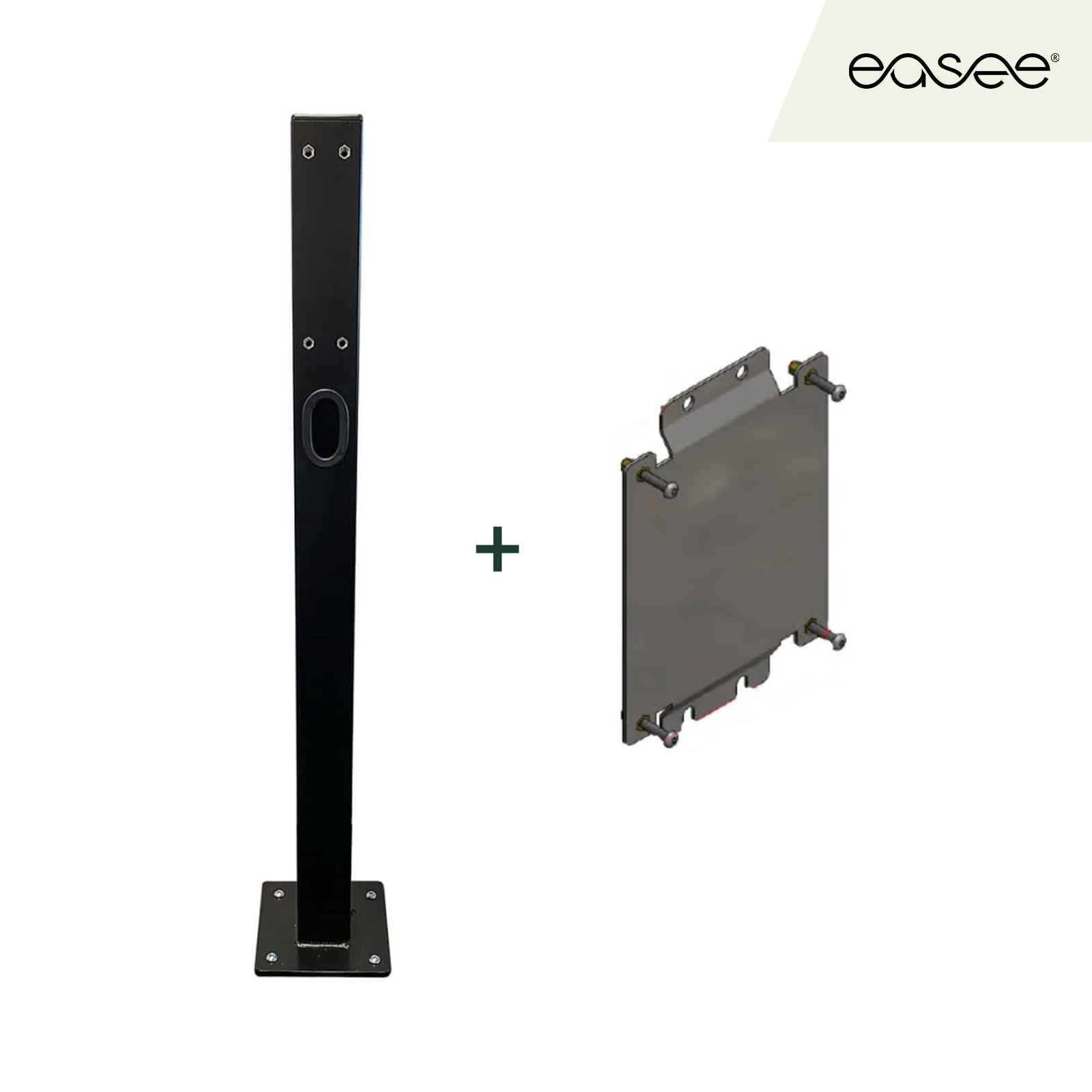
The e.Park Multi Post range is the most flexible — single (£240) and dual (£270) H1105mm posts that take charger-specific plates for most major brands, plus a version with a hatch sized for the Easee Power Rail (£285). EVKube-based versions (£245–£295) come with a pre-cast foundation. Dedicated posts include the e.Park NexBlue single (£310) and back-to-back (£355), the Evec vecBOLT ground mounting post (£285) and Easee's own 1-way (£325), 2-way (£345) and 4-way quad (£419) posts. There is also the e.Park Universal Payment Post (£375) for card terminals.
How much does an EV charging post cost?
Posts start at £240 for the e.Park Black Single Multi Post and run to £419 for the Easee 4-way quad post, all including free UK delivery. Budget for the mounting plate too if the post does not include one — charger-specific plates are £45 to £76 — and for the foundation, whether that is a poured concrete base or a pre-cast block from £275. The post itself is usually the smaller share of the total: on most jobs the groundworks and cable run cost more than the hardware.
Which chargers fit which post?
The e.Park Multi Posts are universal — they take a charger-specific plate pre-drilled for the Easee, Humax MX7, Hydra Cubus, Hypervolt Home 3 Pro, myenergi Zappi, NexBlue, Ohme e.Pod, Ohme Home Pro, Pod Point Solo 3S, Ratio io6, VCHRGD 7kW Pro, VCHRGD Dual 22kW, Zaptec Go or Zaptec Pro, so the unit sits square with no measuring on site. Easee, Evec and NexBlue posts are cut for their own units and do not need a separate plate. If you are mixing charger brands across one site, the e.Park range keeps the posts consistent while the plates differ.
Can one post serve two bays?
Yes, in two ways. A dual post carries two chargers side by side on the same face, from £265 — suitable where both bays are on the same side. A back-to-back post carries one charger on each face, so vehicles in adjacent bays each get a charger pointing at them; the e.Park NexBlue back-to-back is £355. Both approaches mean one excavation, one foundation and one cable run instead of two, which is where the saving comes from on a multi-bay installation. The Easee quad post (£419) extends the idea to four chargers.
What foundation does a charging post need?
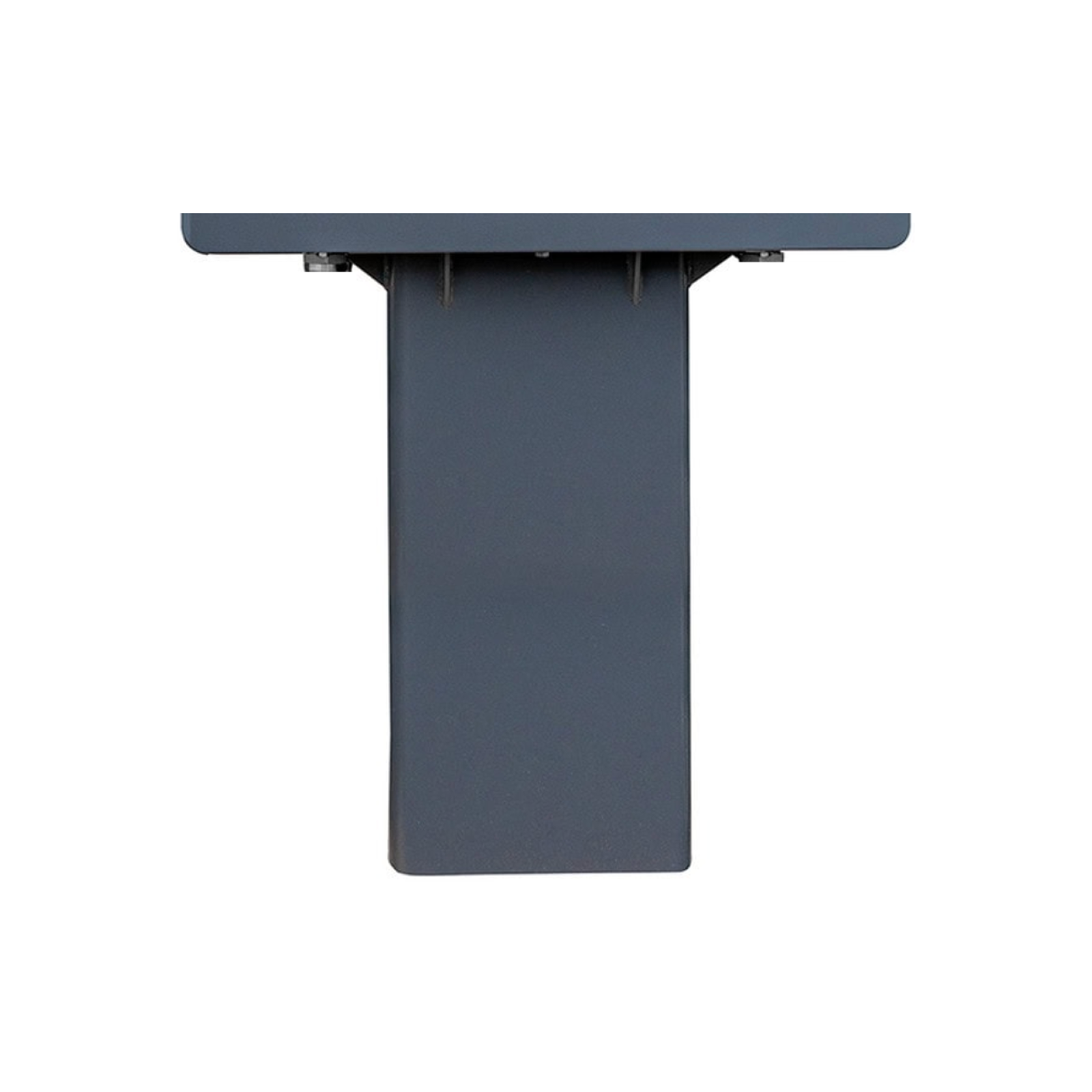
Either a poured concrete base or a pre-cast block. Concrete is cheap and solid but has to cure, holding up the rest of the job. Pre-cast options — the Charge-M8 EV KUBE from £275, or e.Park posts supplied with an EVKube base from £245 — bolt straight down, so the post can be set and the charger fitted the same day. On multi-bay jobs the time saved usually outweighs the extra hardware cost. See all post foundations.
Should I add a crash barrier?
On any car park or shared parking area, yes. A post standing in a bay takes the full force of a mis-judged reverse, and replacing a damaged charger and post costs several times what a barrier does. A hooped barrier bolts to the existing hard standing in front of the post from £155, available in black to blend in or yellow for visibility. It is the cheapest insurance on a commercial installation. See all crash barriers.