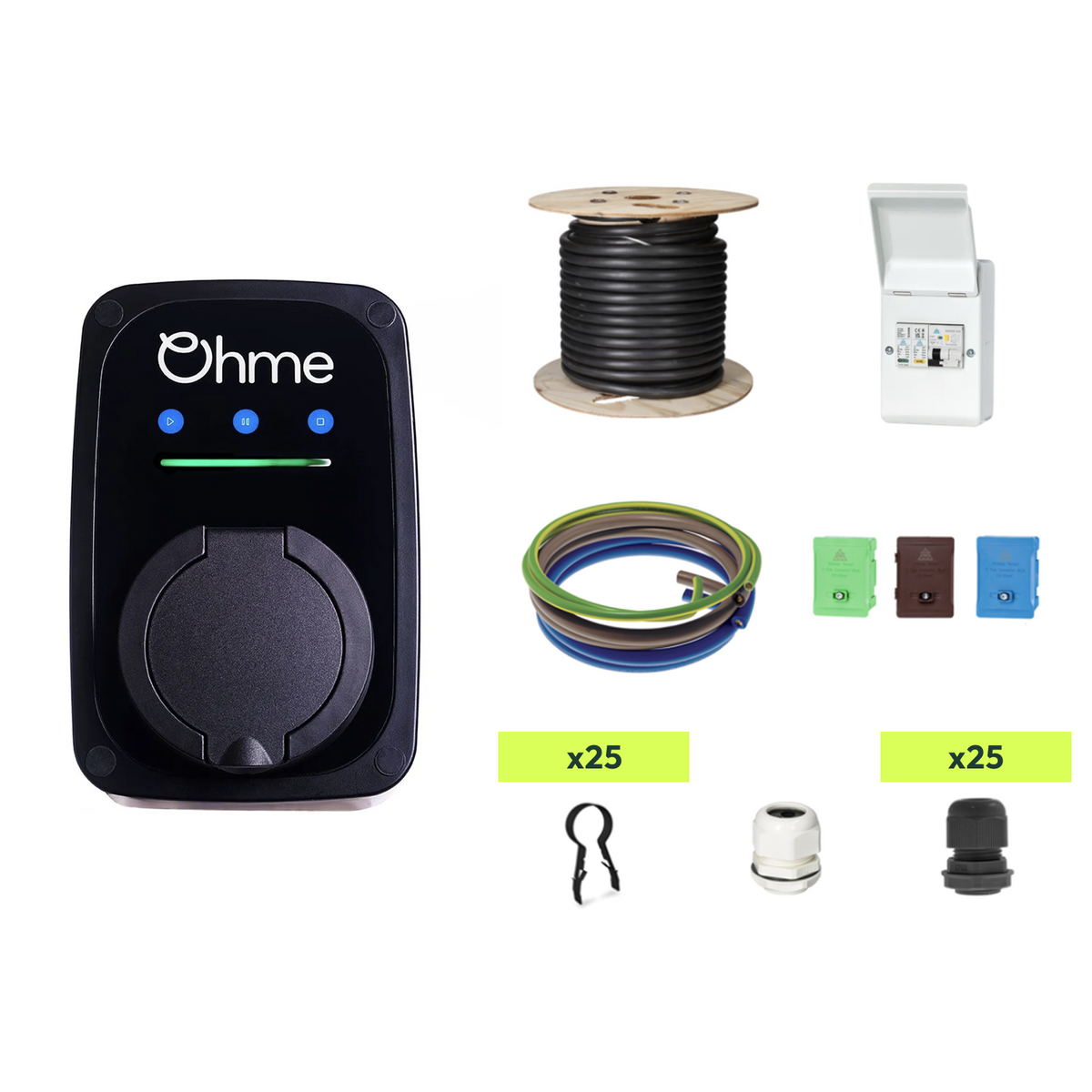
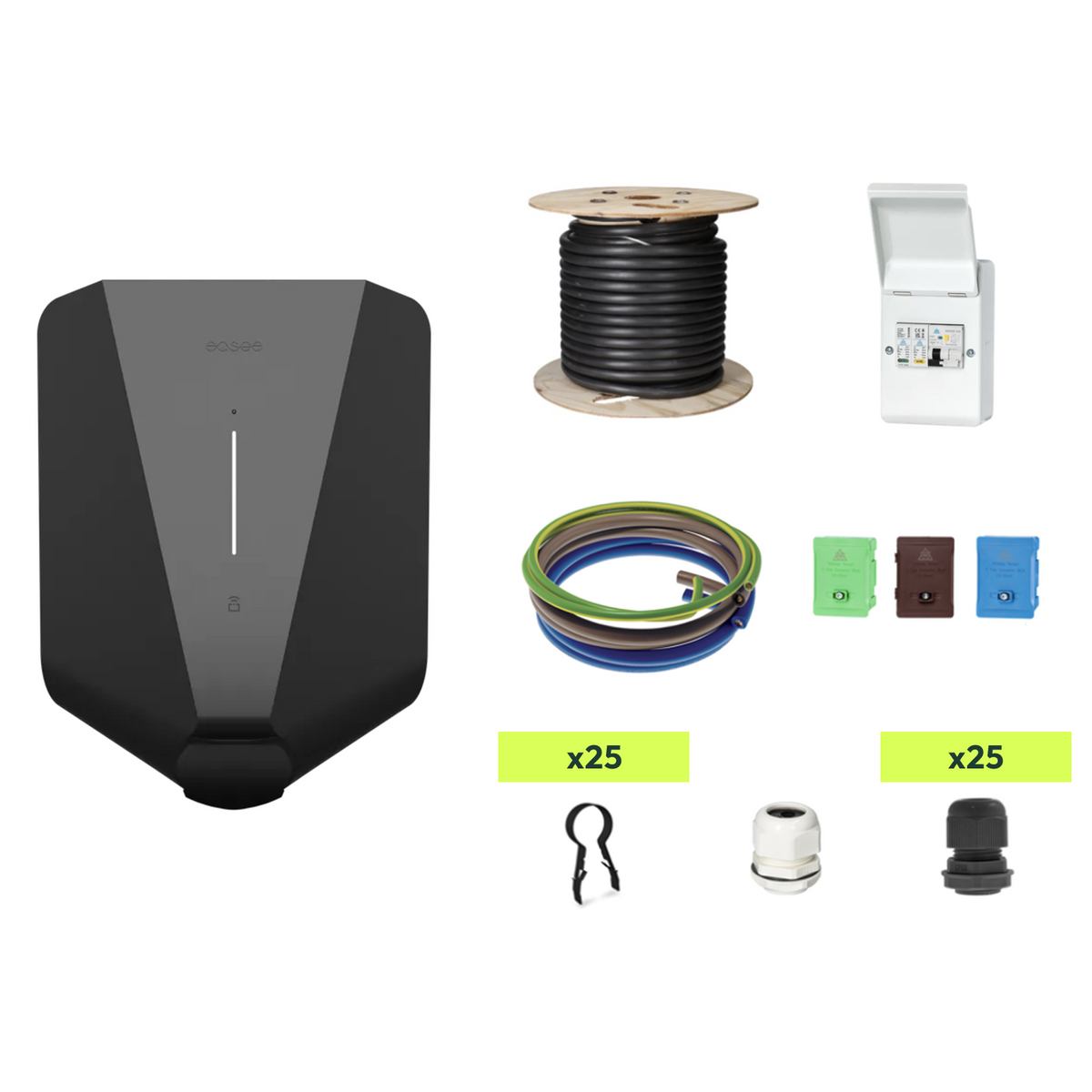
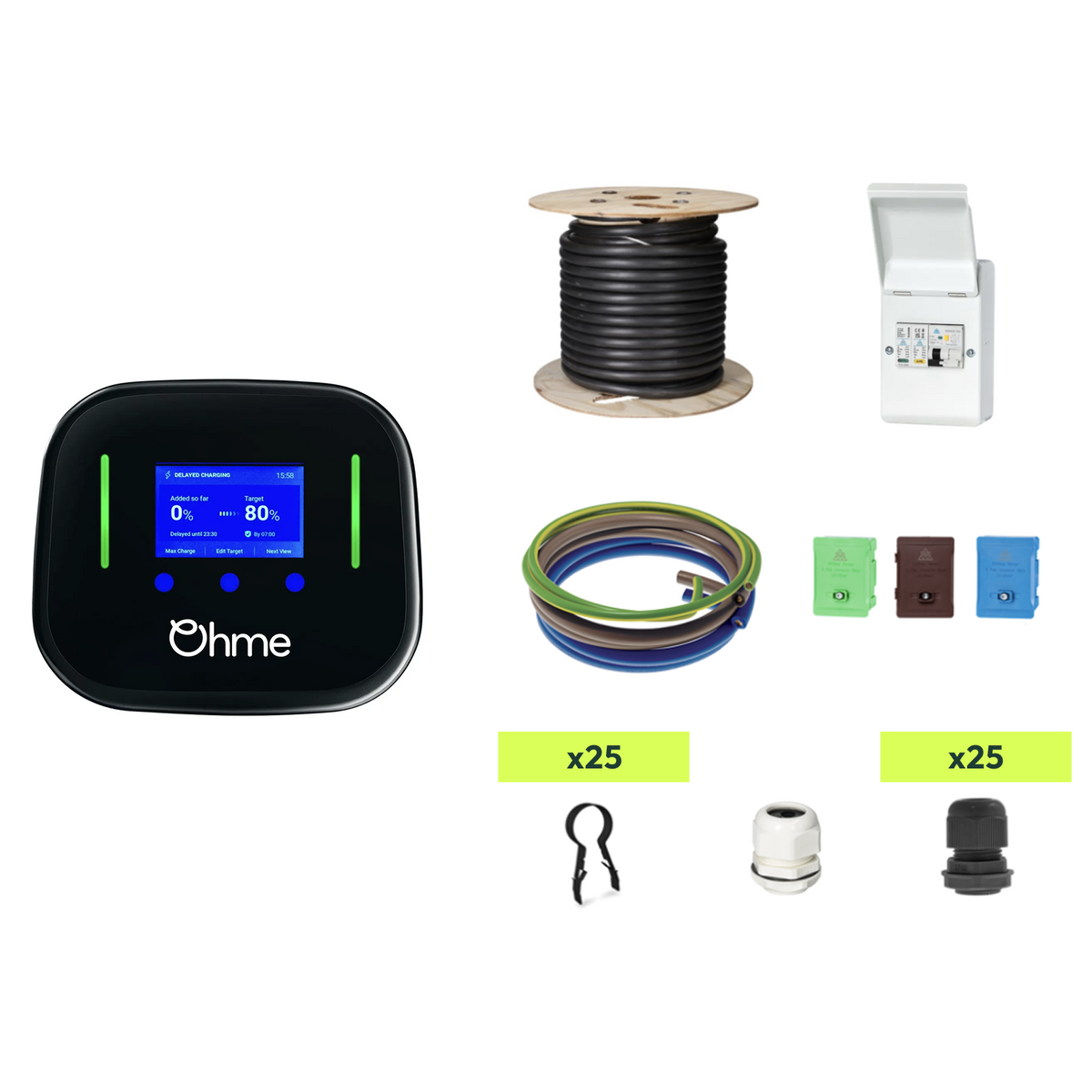
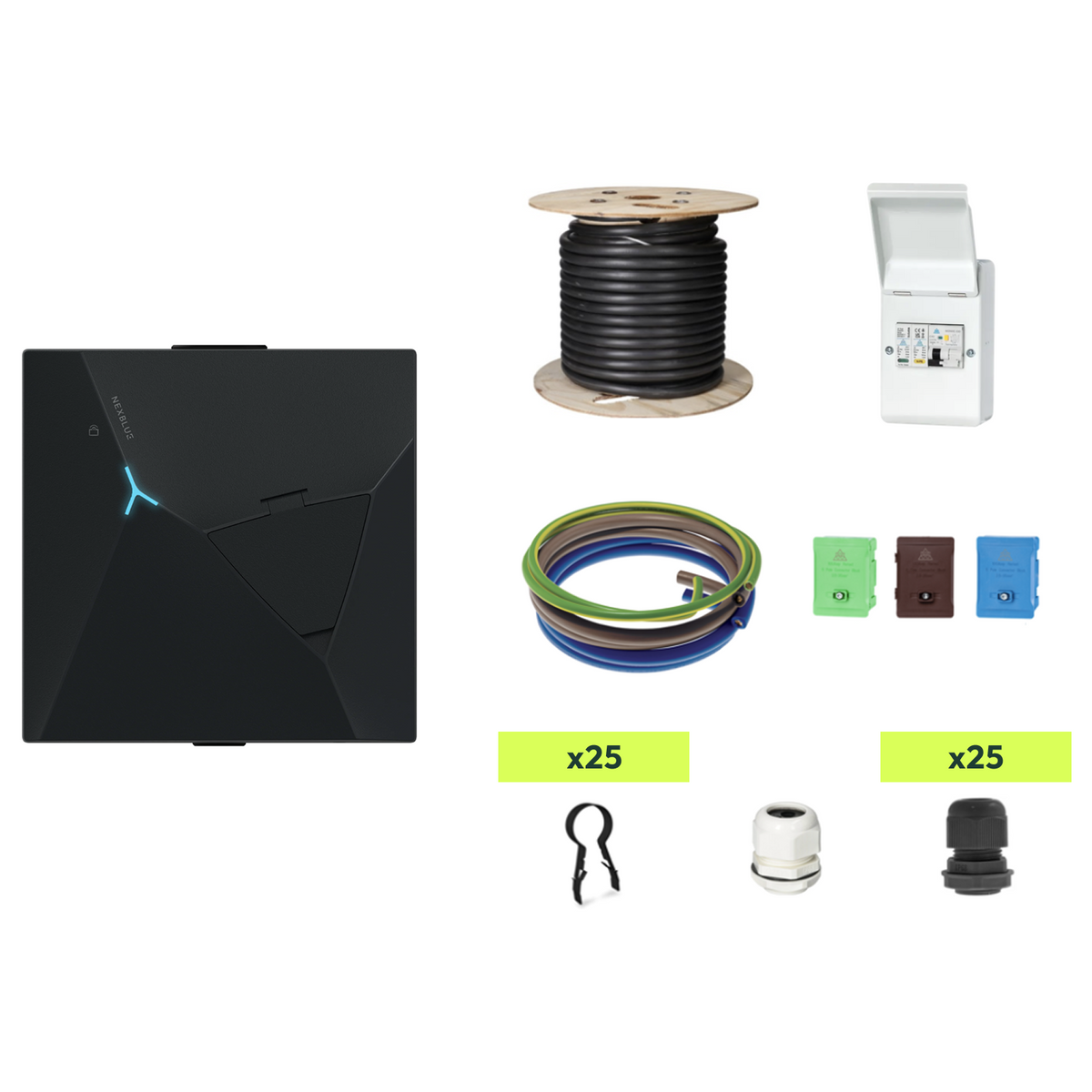
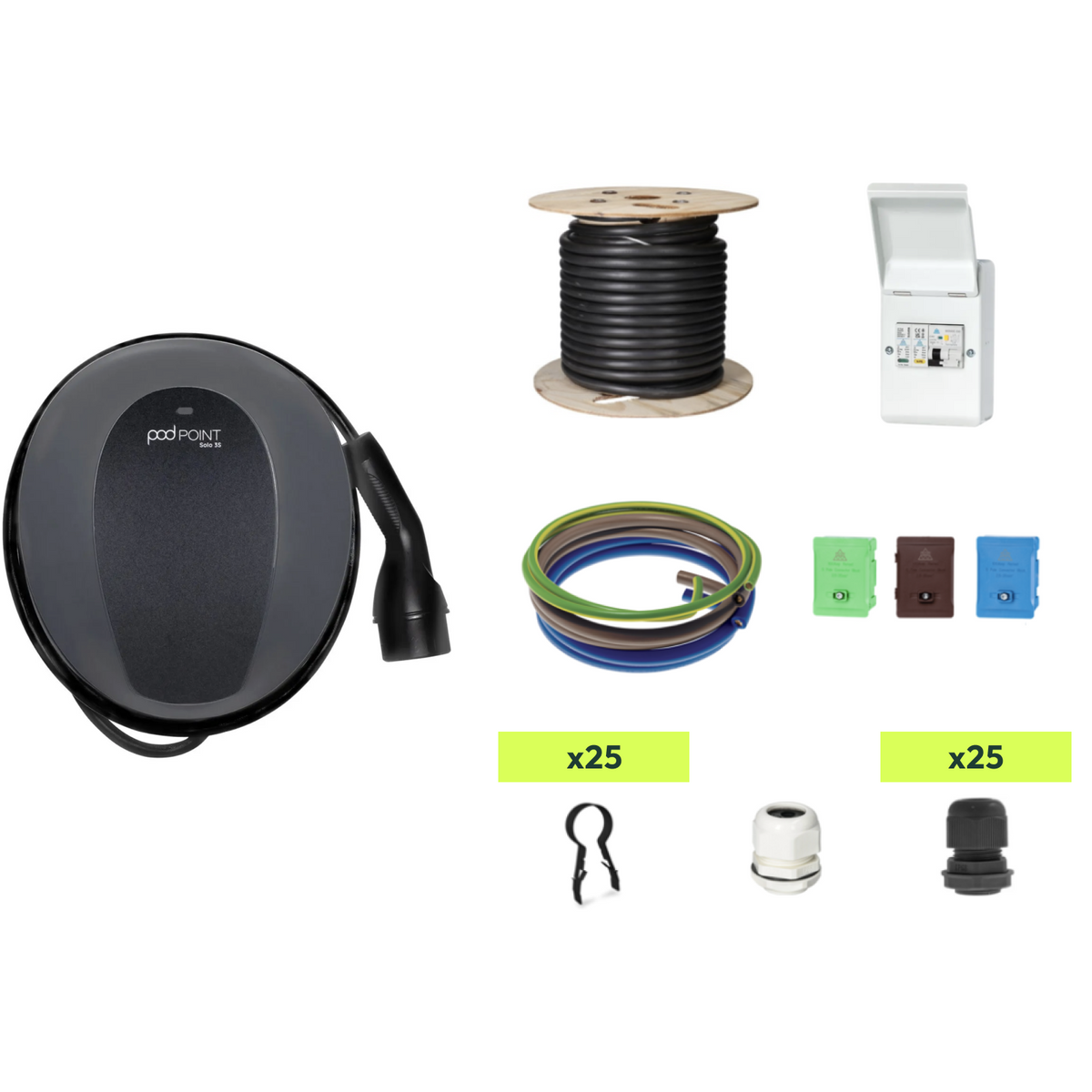
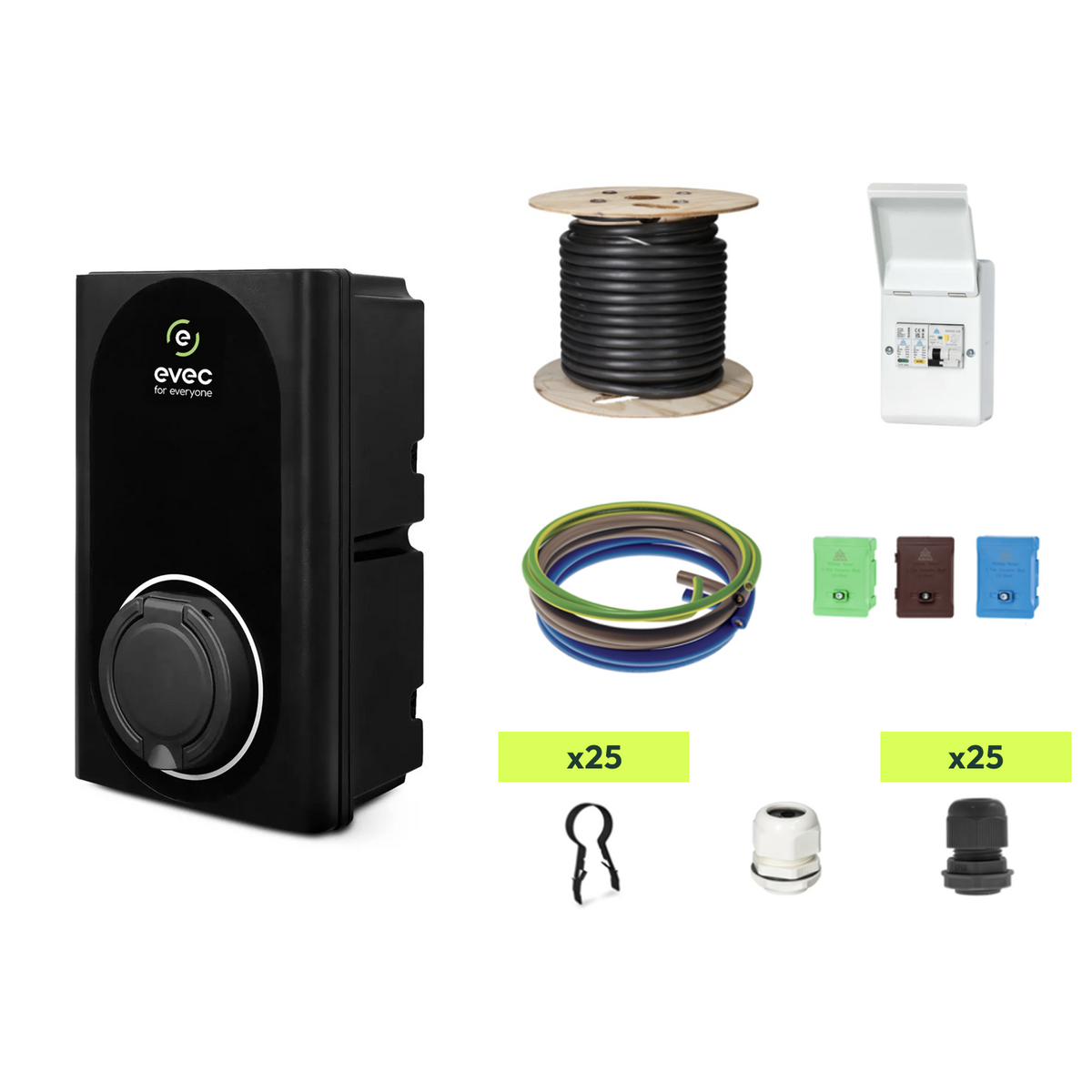
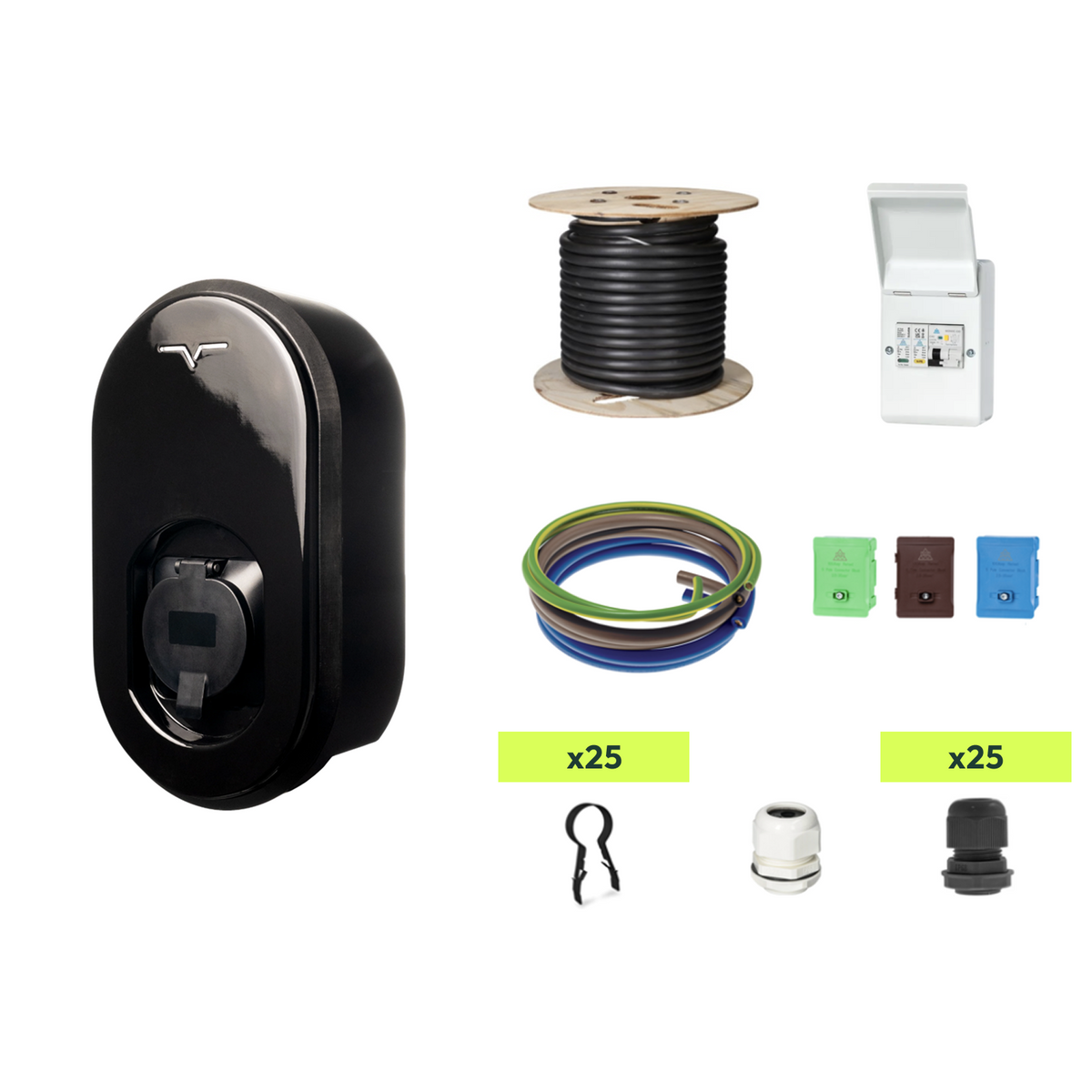
EV installation kits bundle the connection, containment and protection parts a standard domestic charge point install needs into one order — consumer unit, EV cable, glands, tails and the rest — rather than picking them off three different supplier lists. Our kit starts at £145, with each component also stocked individually if you would rather build your own. Free UK delivery on trade orders.
The parts an installer reaches for on a typical single-phase domestic job: a consumer unit with an appropriately rated RCBO, EV-rated cable for the run, glands and tails, and the associated connection sundries. It is assembled around the standard 7kW home installation, which is the overwhelming majority of domestic work. Each item is stocked separately too, so the kit is a convenience rather than a lock-in — if a particular job needs a different device or a longer cable, substitute it.
Why buy a kit instead of individual parts?
Time, mostly. Sourcing six or seven small items from different places for every install adds up across a week's work, and running out of glands on site costs more than the glands do. A kit also makes van stock predictable: you know what a standard job consumes and can hold the right number. For anything non-standard — a long run, a supply upgrade, three-phase, or load management — you are back to specifying individually, and the components pages cover that.
Does the kit include the charger?
No — the kit covers the installation materials, not the charge point itself. Choose the charger separately from our 7kW home charger range, which starts at £312 and includes OZEV-approved models from Evec, Sync Energy, Deta, VCHRGD, VEVA, Sevadis and others. Keeping them separate is deliberate: the charger is the part that varies job to job, while the installation materials rarely do.
Do I still need an earth rod?
Usually not. Most current chargers include PEN fault detection, which removes the need for a separate earth electrode on a TN-C-S supply and takes a job off the installation. Check the specific charger's specification, since it also determines what protective devices are required upstream — a charger with built-in 6mA DC protection needs only a Type A device, while one without needs Type B. See our EV consumer units for both.