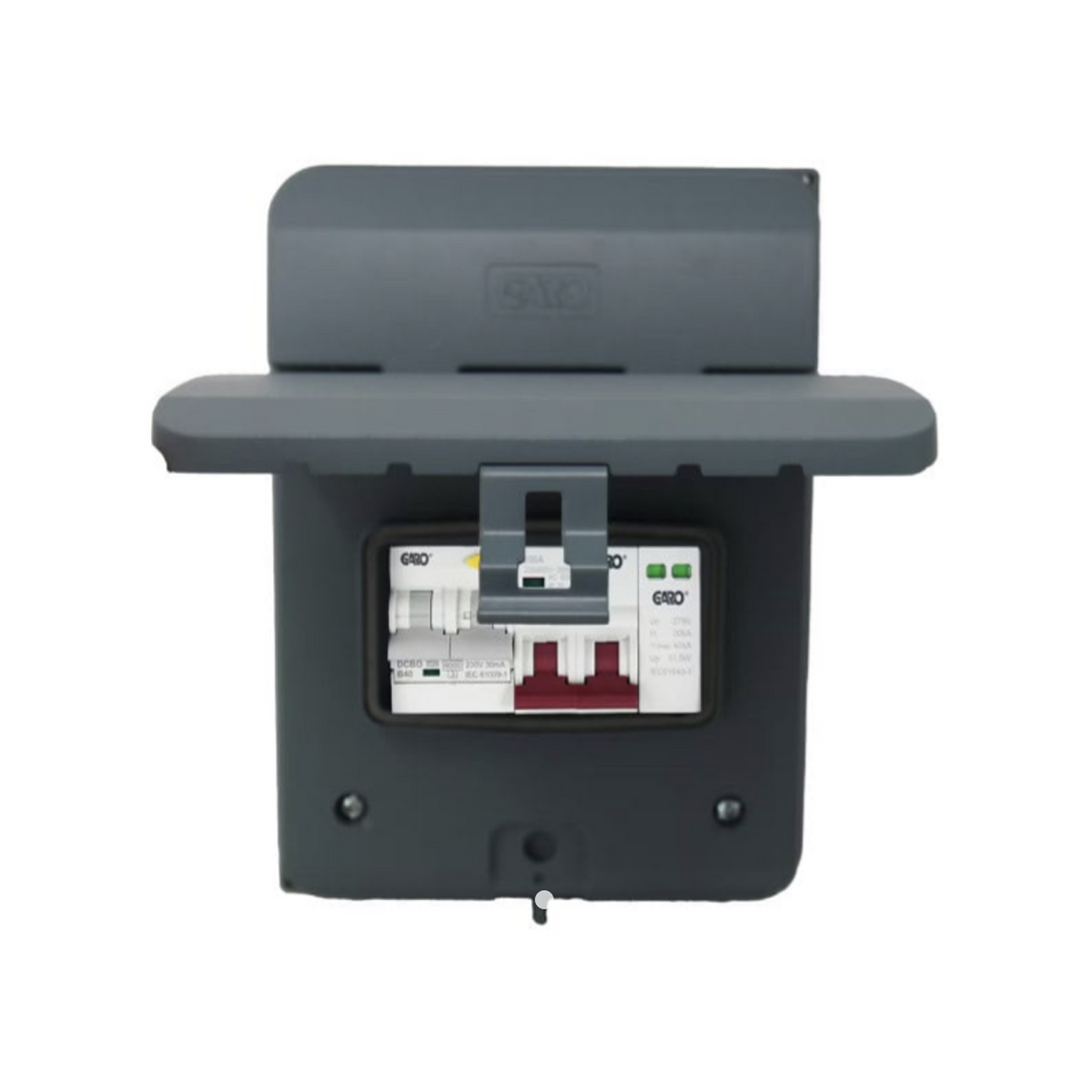
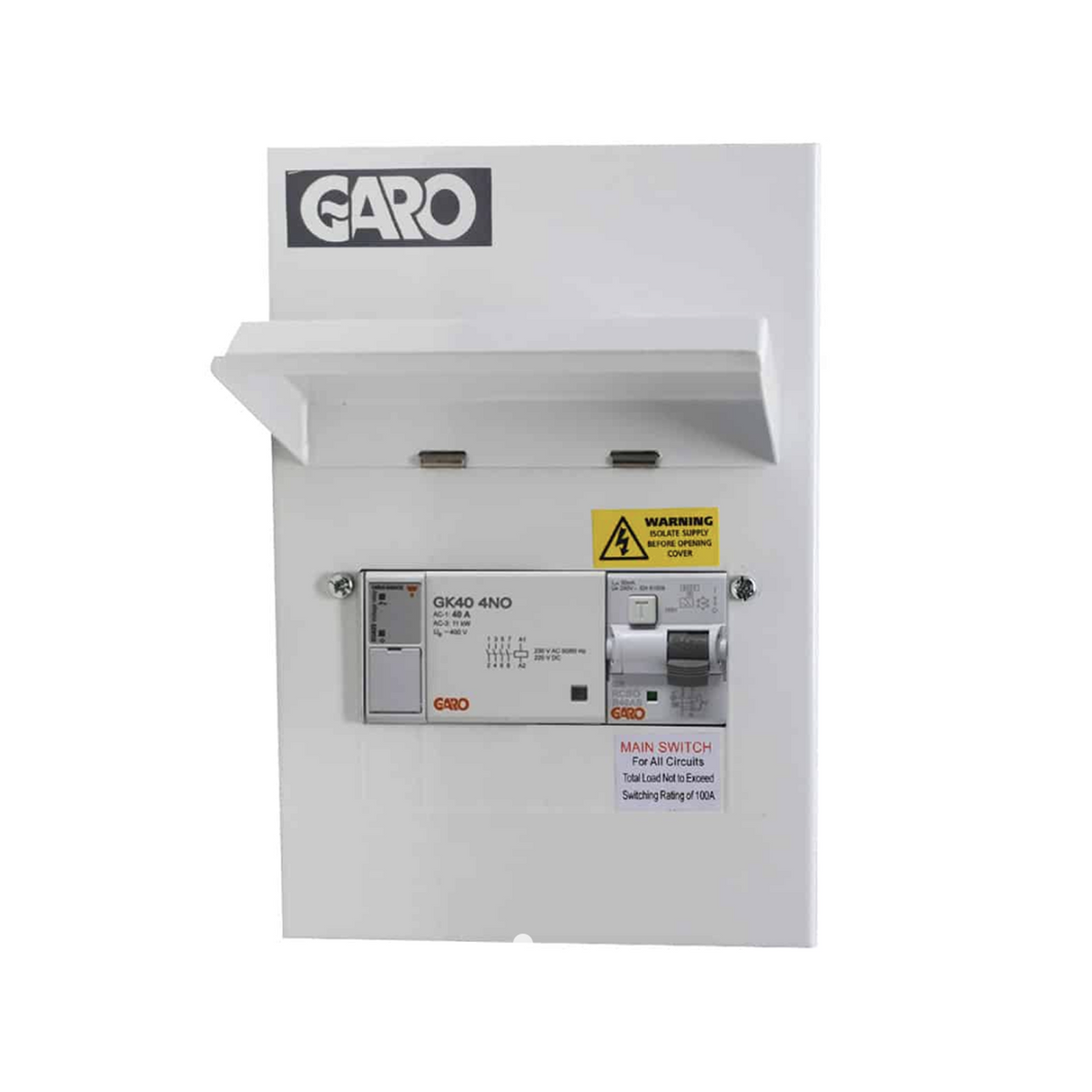
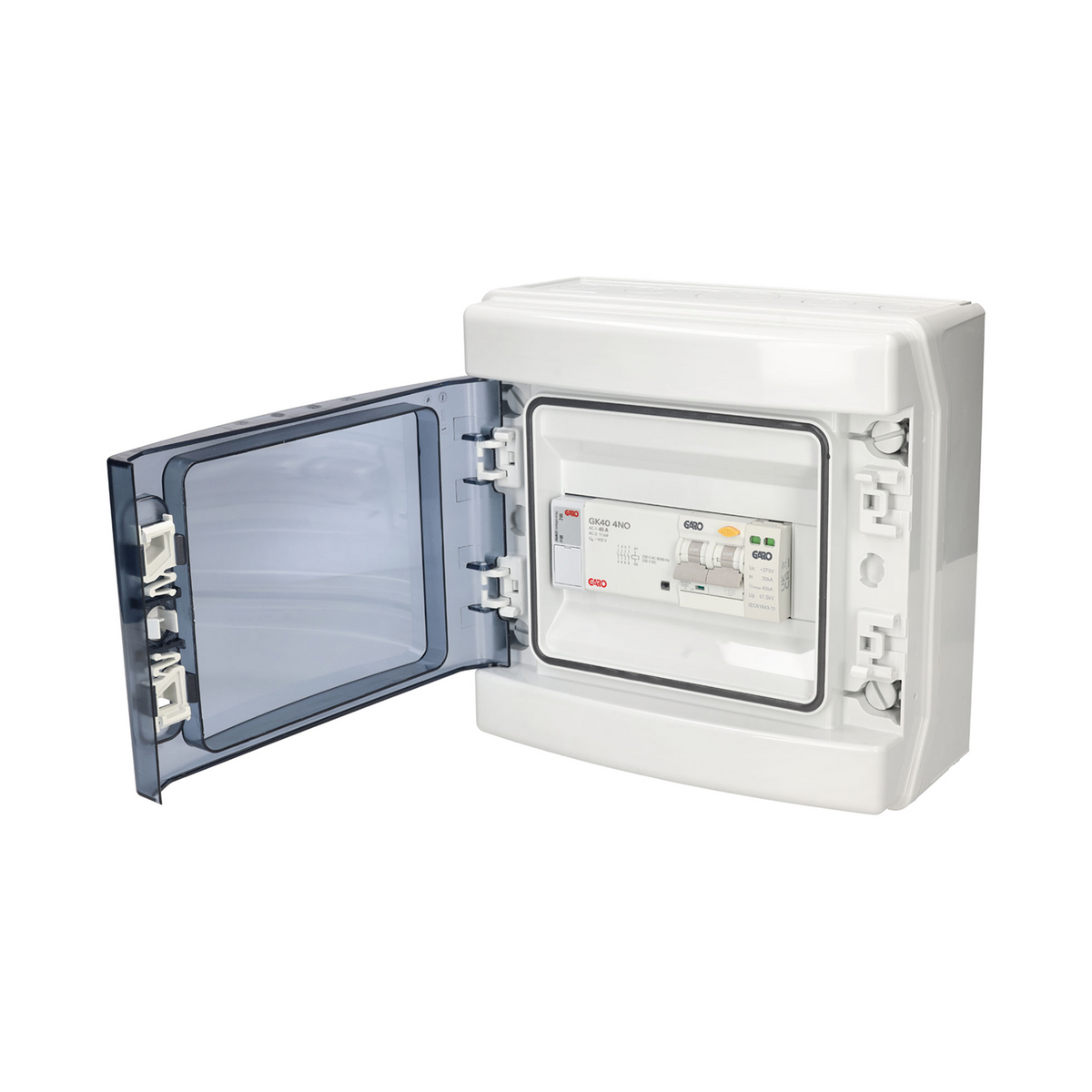
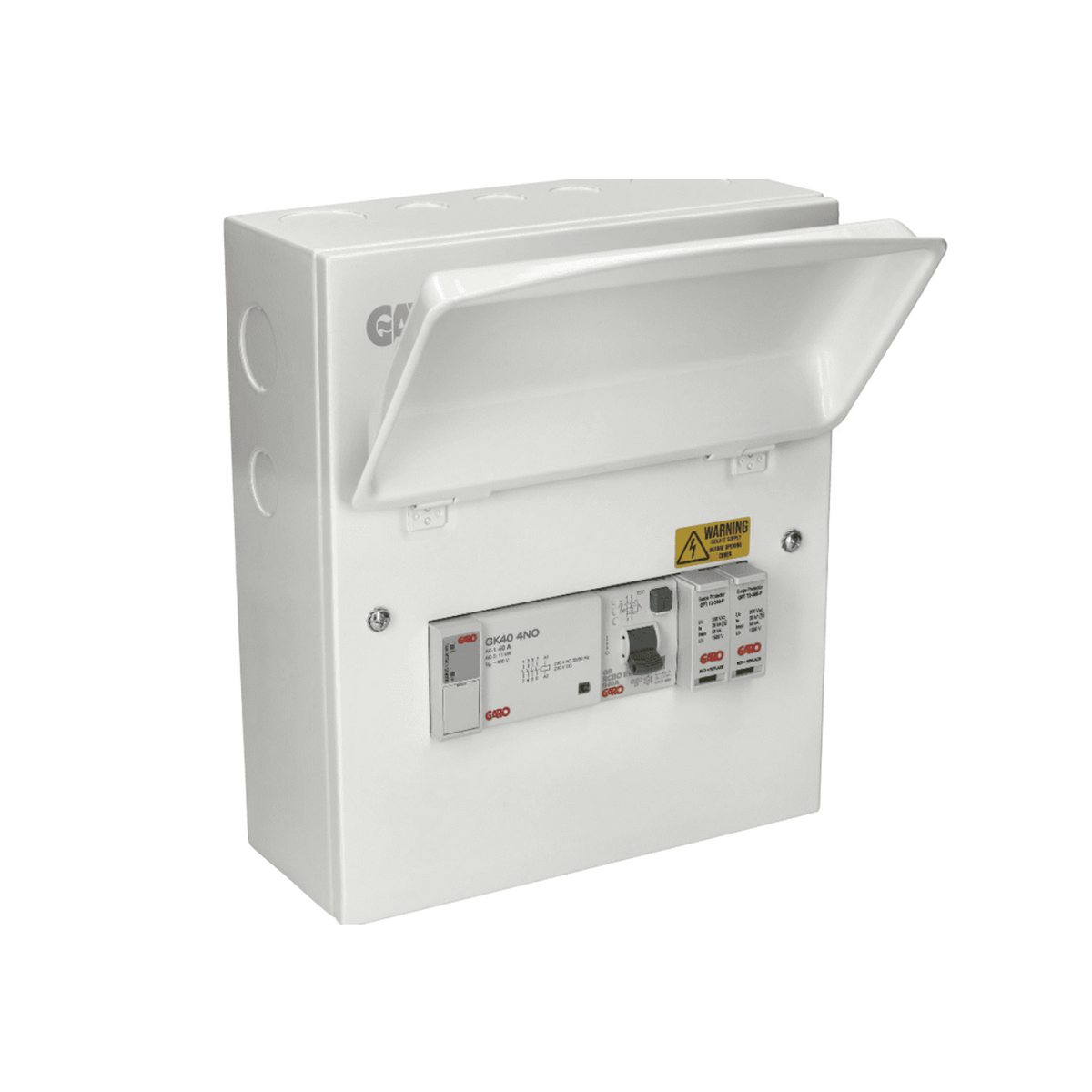
GARO EV consumer units are ready-assembled protection enclosures for dedicated electric vehicle charging circuits. Each unit is built around a 40A Type A RCBO, with PME (open-PEN) fault detection and, on most models, an integrated surge protection device, so the installer is not assembling a board on site. All units are manufactured to EN 61439-3 and are supplied for use in installations to BS 7671.
Four dedicated EV supply units. The GS8EV40PME is an 8-way IP40 metal unit with a 40A Type A RCBO, PME fault detection and surge protection. The GCS8EV40PME is the same 8-way specification in an IP65 enclosure for exposed positions. The G6EV40PME is a 6-way IP40 unit with a 40A Type A RCBO and PME fault detection. The GMS5EV40R is a 5-way IP65 unit with a 100A double-pole isolator, a 40A 30mA bi-directional RCBO and a Type 2 SPD, for installations where energy can flow in both directions.
What is PME fault detection?
On a PME (TN-C-S) supply, a broken combined neutral and earth conductor in the network can raise the voltage on exposed metalwork, including a car connected to a charger outdoors. BS 7671 Regulation 722.411.4.1 offers an option where a device disconnects the vehicle from the live conductors and from protective earth if the voltage between line and neutral moves outside the 207V to 253V range. The PME fault detection built into these GARO units performs that function, with a four second response, and only allows reclosing once the voltage is back within range.
Do I need a Type A or Type B device?
A Type A RCBO detects AC and pulsating DC residual current. Smooth DC residual current is dealt with by the 6mA DC detection built into most current smart chargers, and where the charger provides that, a Type A device upstream is the appropriate choice. These GARO units are Type A. Where a charger does not include its own DC leakage detection, a Type B device is required instead, so check the charger specification before ordering.
Which IP rating do I need?
IP40 units are for indoor positions such as a garage, utility room or meter cupboard. IP65 units are sealed against dust and low pressure water jets and are the choice where the unit is mounted outside, next to the charger, or anywhere damp. The GS8EV40PME and GCS8EV40PME share the same electrical specification, so the decision between them is purely about where the unit is going.
What does the bi-directional RCBO on the GMS5EV40R do?
A conventional protective device assumes energy flows one way, from the supply towards the load. A bi-directional RCBO is designed to operate correctly with current flowing in either direction, which is what happens once solar PV, battery storage or a vehicle capable of exporting energy forms part of the installation. The GMS5EV40R pairs that 40A 30mA bi-directional RCBO with a 100A double-pole isolator and a Type 2 surge protection device in an IP65 enclosure.